
If you've spent any time on social media looking at health and wellness content, you've probably seen the posts.
You know the ones! Perfect glass meal prep containers lined up in a pristine refrigerator. Color-coded vegetables arranged in aesthetically pleasing rows. Quinoa portioned into exact servings. Everything labeled with cute handwritten tags.
And the caption always says something like, "Sunday meal prep done! Set yourself up for success!"
Here's what those posts don't show you: the three+ hours it took to make all that food. The fact that by Thursday, you're sick of eating the same thing. The overwhelm of trying to plan, shop for, and cook an entire week's worth of meals in one day while also managing everything else in your life.
If you're a busy woman - whether you're working, care-taking, or both - that level of meal prep is not realistic. And here's the good news: you don't need it to support your hormones.
Hormone-healthy eating doesn't require Instagram-perfect meals or hours of Sunday prep. It requires understanding what your body needs and finding simple, sustainable ways to give it that.
The Instagram Lie About “Healthy Eating”
Let's be honest about what most wellness content is selling you: perfection.
Perfect meals. Perfect portions. Perfect timing. Perfect ingredients sourced from the farmer's market and prepared from scratch in your spotless kitchen while your well-behaved children play quietly nearby.
I’m exhausted just thinking about it.
And the implication is that if you're not doing it this way, you're not really taking care of yourself. If you're grabbing frozen rice or microwaving a sweet potato or eating leftovers three days in a row, you're somehow failing at health.
But here's the truth: most of those perfectly curated meal prep posts are aspirational content, not real life. They're designed to get likes and followers, not to actually help you figure out how to feed yourself when you're juggling work deadlines, kids' schedules, and everything else that fills up your day.
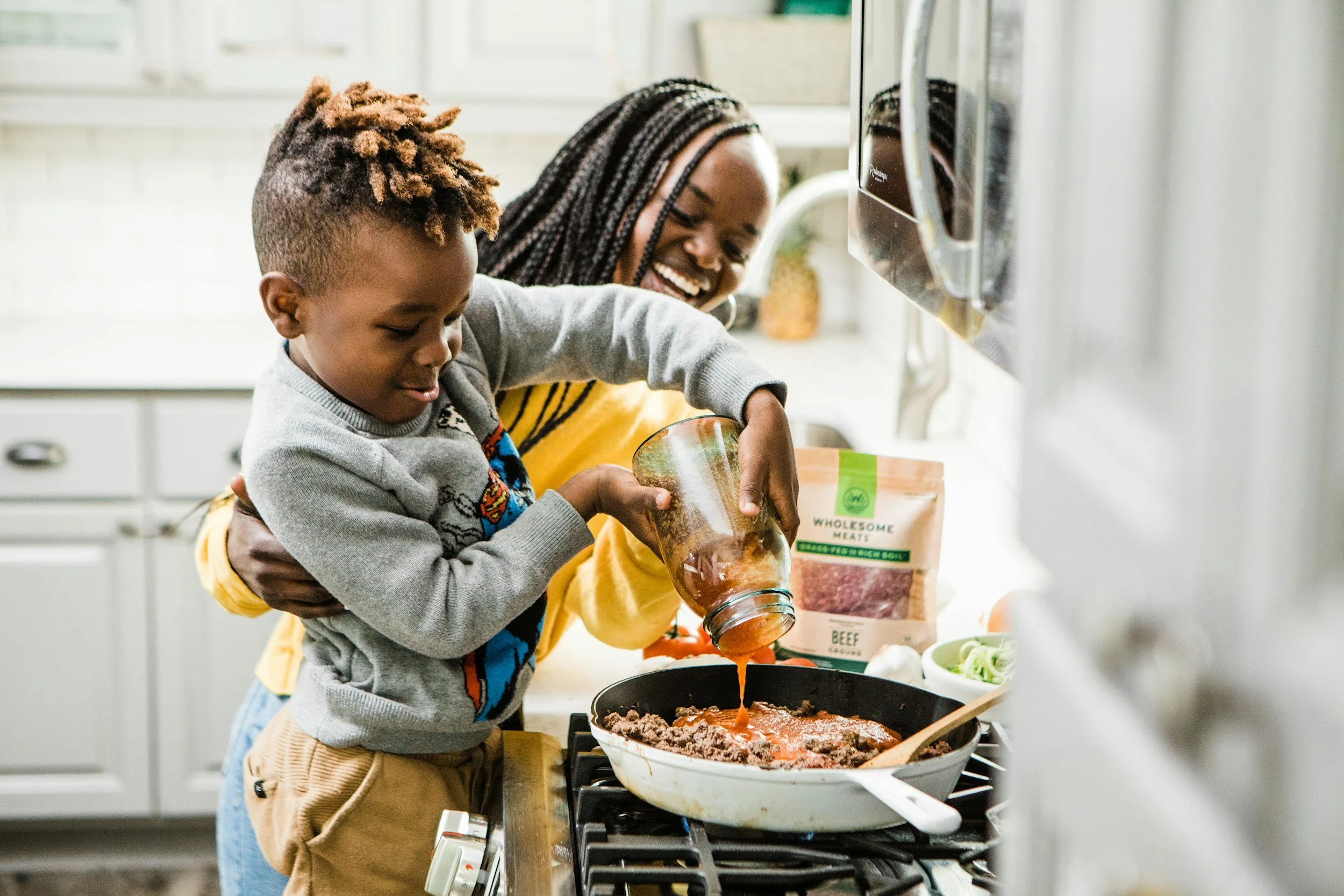
Real life is messy. Real life is throwing together whatever you have in the fridge and calling it dinner. Real life is eating the same thing multiple days in a row because you made a big batch and you're not wasting it. Real life is sometimes picking up takeout because you just don't have it in you to cook.
And all of that can still support your hormones. You just need to know what actually matters.
What Actually Matters for Hormone Health
Here's the thing about eating for hormone health: it's way simpler than the internet makes it seem.
You don't need fancy superfoods or expensive supplements or perfectly portioned meals. You need three things at every meal: protein, fat, and carbs. You need to eat regularly throughout the day. And you need to eat enough food.
That's it. That's the foundation.
Protein, fat, and carbs together keep your blood sugar stable, which keeps your hormones balanced. When you skip one of these macronutrients, like eating a salad with no fat or protein, or having toast with just butter, your blood sugar spikes and crashes, which stresses your hormones.
Eating regularly means not going more than 4-5 hours between meals. When you skip meals or go too long without eating, your blood sugar drops and your body releases cortisol to bring it back up. Cortisol suppresses your reproductive hormones, which means your cycle suffers.
Eating enough means eating meals that actually fill you up and keep you satisfied for 4-5 hours. If you're hungry an hour after eating or constantly thinking about your next meal, you're probably not eating enough. Most women I work with are drastically under-eating and wondering why they have period problems.
Everything else (the organic produce, the grass-fed meat, the perfectly timed eating windows) is nice to have, but it's not essential. If you're getting those three things right most of the time, you're supporting your hormones. And you can do that without spending hours in the kitchen every Sunday. (Go do something fun instead).
I follow the 80/20 rule: 80% of the time, I'm eating balanced, nourishing meals that support my hormones. 20% of the time, I'm eating whatever is convenient, easy, or sounds good, because life happens and that's okay. Both support my hormones because I'm not starving myself or stressing about perfection.
My Real-Life Shortcuts
I'm a mom with a toddler, a business, and a life. I don't have time to make everything from scratch or spend my weekends meal prepping. So here's what I actually do.
When I have time, I batch cook for a few days. Not a whole week because that feels overwhelming and the food gets boring. But if I'm already cooking dinner, I'll make extra and eat it for lunch the next couple of days.
My go-to batch cooking staples:
Bone broth rice (I cook rice in bone broth instead of water for extra protein and minerals)
Roasted sweet potatoes and carrots (throw them on a sheet pan, toss with avocado oil and salt and roast at 450°F, done)
Cooked proteins: chicken, ground turkey, or slow cooker pork
Greens (I'll sauté a big batch of spinach, kale, or chard)
Chia pudding (mix chia seeds with coconut or almond milk and collagen the night before, add berries and nuts in the morning)
These things keep for 3-4 days in the fridge, and I can mix and match them for different meals without eating the exact same thing every day.
But I also embrace convenience. Frozen rice is a staple in my freezer! I throw sweet potatoes in the microwave. I buy pre-washed greens. I use rotisserie chicken from the grocery store. None of this is "from scratch," and all of it supports my hormones just fine.
The point isn't to make everything yourself. The point is to have easy options available so you're never stuck with nothing to eat and end up skipping meals or eating something that leaves you feeling terrible.
Quick Meal Ideas (That Actually Take 10 Minutes or Less)
Here are some of my go-to meals that don't require a stove, a complicated recipe, or more than 10 minutes of your time.
Breakfast (No Stove Required)
Chia or hemp pudding: Mix chia seeds and/or hemp hearts with coconut milk or almond milk, collagen and a little maple syrup the night before. In the morning, top with berries, stewed fruit, pumpkin seeds, and walnuts. You can make this in a mason jar and grab it on your way out the door.
Greek yogurt bowl: Full-fat Greek yogurt (if you tolerate dairy) with a scoop of collagen powder or protein powder to boost the protein, plus berries and nut butter. This keeps you full for hours and takes literally two minutes to throw together.
Lunch (Leftovers or Quick Assembly)
Ground turkey bowl: Cook up a pound of organic ground turkey with your favorite spices (some of my faves are cumin, garlic powder, smoked paprika, salt). Store it in the fridge and use it throughout the week. Throw it over greens, arugula, or leftover roasted veggies, add a sweet potato or some rice, drizzle with olive oil. Done!
Deconstructed burger bowl: Leftover burger patties (or cook a few at once) over greens with pickles, avocado, tomatoes, onions, maybe some roasted potatoes if you have them. All the burger toppings, none of the bun (unless you want the bun, then add the bun). It's like a salad but more fun.
Dinner (Family-Friendly and Fast)
Scrambled eggs and toast: This is our go-to when I don't feel like cooking. Scramble eggs in a generous amount of ghee or butter, toast some sourdough, add avocado, sauté some greens or throw some arugula on the side, and brown up some turkey sausage if you have it. Breakfast for dinner, and everyone's happy!
Sheet pan salmon: Salmon, frozen rice (microwaved), and roasted broccoli. The salmon and broccoli cook together on the same sheet pan in the oven, so there's almost no cleanup. Twenty minutes total, and it's a completely balanced meal.
The theme here is simple. Protein + carb + fat + veggies. Mix and match. Use what you have and don’t overthink it!
What to Keep in Your Pantry (So You’re Never Stuck)
The key to easy, hormone-supportive eating is having the right staples on hand. When you stock your pantry and freezer with basics, you can throw together a balanced meal even when you haven't been to the grocery store in a week.
Pantry Staples:
Healthy fats: Chia seeds, flax seeds, hemp hearts, pumpkin seeds, walnuts, pistachios, almond butter, peanut butter, coconut oil, ghee, olive oil, avocado oil
Carbs: Gluten-free rolled oats, rice: brown, white, and black, sweet potatoes, regular potatoes, chickpea pasta, sourdough bread
Proteins and protein boosters: Collagen powder, bone broth
Dairy/dairy alternatives (if you use them): Coconut milk, almond milk, goat cheese, full-fat Greek yogurt
Freezer Staples:
Proteins: We stock up on ButcherBox meat (pasture-raised, grass-fed) and keep it in the freezer. Ground beef, ground turkey, chicken thighs, salmon, burger patties, pork shoulders. Having these on hand means I can always pull something out to thaw and have protein for dinner, and it gives me a foundation for meal ideas - I just build it around the protein!
Convenience items: Frozen rice, frozen vegetables, frozen berries
Fresh Staples:
Eggs: Pasture-raised eggs are a staple. I always have at least two dozen in the fridge because they're so versatile.
Greens: Pre-washed greens, arugula, spinach, whatever's on sale
Seasonal vegetables: I buy whatever's in season because it's less expensive and tastes better. Right now that might be Brussels sprouts and squash. In the summer it's zucchini and tomatoes. Your gut actually loves this variety too! Eating different vegetables throughout the year keeps your microbiome healthy and diverse.
When you have these basics stocked, you can always pull together a balanced meal without needing a detailed plan or a trip to three different stores.
The 80/20 Rule in Action
80% of the time, I'm eating balanced meals that include protein, fat, and carbs. I'm cooking at home or using leftovers. I'm eating regularly throughout the day. I'm prioritizing nutrient-dense foods. This supports my hormones, keeps my energy stable, and makes me feel good.
20% of the time, I'm ordering takeout because I'm too tired to cook. I'm eating whatever sounds good even if it's not perfectly balanced. I'm having peanut butter and jelly with my daughter. I'm grabbing something convenient because I'm out of the house and didn't pack a meal.
And you know what? Both of these support my hormones. Because the 20% doesn't undo the 80%, and the 80% gives my body enough of what it needs that the 20% doesn't matter.
The problem isn't having pizza on Friday night. The problem is thinking you need to eat perfectly 100% of the time and then feeling like a failure when you don't. That stress, the guilt, the shame, the constant striving for perfection, is way worse for your hormones than the occasional takeout meal.
So give yourself permission to be human. Eat well most of the time. Don't stress about the rest.
The Bottom Line
You don't need to meal prep like an Instagram influencer to support your hormones. You don't need color-coded containers or perfectly portioned meals or three hours every Sunday.
You need protein, fat, and carbs at every meal. You need to eat regularly. You need to eat enough food. And you need to stop making it harder than it has to be.
Simple works. Leftovers work. Frozen rice and microwaved sweet potatoes work. Scrambled eggs for dinner works. It all works as long as you're consistent and you're eating enough.
Hormone-supportive eating is about building habits you can actually maintain, not performing wellness for the internet. And when you let go of the pressure to be perfect, eating becomes so much easier.
If you’re struggling to figure out what simple, sustainable eating looks like for your life, I can help.
My 6-month coaching program is designed for real women with real lives who don't have time for complicated protocols or Instagram-perfect meals. We'll figure out what works for YOUR schedule, YOUR body, and YOUR life - not what looks good in a post.
If you're ready to stop stressing about food and start feeling better, let's talk. I offer free discovery calls where we can go over what's happening in your body and whether my approach is the right fit.
Curious what’s driving your symptoms? Take the free 2-minute Untangle Your Hormones quiz to find your personalized pattern, and a clear next step to start feeling like yourself again.
If you liked this post, you may also like:
→ 11 Signs of Hormonal Imbalance in Women
→ Why Eating More Might Be the Key to Getting Your Period Back

About the Author
Hi, I’m Sam.
I help women whose hormones have been disrupted by stress or birth control reclaim rhythm and trust in their bodies. With lived experience, deep training, and a non-restrictive, nervous-system-friendly approach, I guide you to restore hormonal balance without control or restriction.

Perimenopause weight gain isn't a willpower problem. Here's why fasting can backfire and what really helps you feel strong, steady, and at home in your body.