I Had the Perfect Pregnancy Eating Plan. Then I Got Pregnant.
I got engaged in the fall of 2020, right in the middle of my birth doula training. I was surrounded by a community of women who were passionate about natural birth, yoga, plant-based eating, and all things crunchy wellness. The training itself was life-changing. I learned so much about how bodies work, what women need during labor, and how to support someone through one of the most vulnerable experiences of their life. I'm genuinely grateful for that education.
But I also got swept up in the culture around it.
Everyone seemed to be vegan or vegetarian. Everyone was drinking green smoothies and talking about how animal products were inflammatory and unnecessary. And even though I knew better, even though I had literally restored my own period by eating more animal protein and fat after years of restriction, I thought, "Maybe they're right. Maybe I just need to do it better this time."
Spoiler: They weren't right. And I didn't need to do it better. I needed to stop ignoring what my body had already taught me.
The Vegan Experiment (Strike 3)
This was my third attempt at veganism. The first two times, I felt terrible and gave up after a few months. But this time, I was determined. I supplemented with B12 and made sure I was combining proteins correctly. I thought if I just tried hard enough, I could make it work.
And then my period became a joke.
I went from having a regular 28-day cycle to a 22-day cycle with bleeding that lasted maybe two days and was so light it barely counted. I called my gynecologist in a total panic, even though deep down, I knew exactly what was going on.
My body was screaming at me to stop.
The flirtation with veganism was officially over. For the third and final time, I admitted that my body does not thrive without animal protein. And here's why that matters if you're thinking about pregnancy: your body needs all nine essential amino acids to make hormones, build tissue, and support a developing baby. And you can't get a complete amino acid profile from plant-based sources alone.
Sure, you can combine foods to get closer (beans and rice, quinoa and lentils), but you're still missing or getting insufficient amounts of key amino acids like lysine, methionine, and tryptophan, all of which are critical for hormone production and fertility. Animal proteins (eggs, meat, fish, dairy) provide all nine essential amino acids in the right ratios, which is why they're so important when you're preparing your body for pregnancy.
I wasn't just feeling like crap because I was being dramatic. My body literally didn't have the building blocks it needed to function properly.
Back To My Roots: the “Perfect” Plan
I went back to what had worked before: Lily Nichols' approach to fertility and pregnancy nutrition. If you're not familiar with her work, she's a dietitian who focuses on nutrient-dense, real-food eating for pregnancy. (Check out her book here!). Her philosophy is basically: eat an abundance of protein, prioritize nutrient-dense foods and definitely don’t be afraid of fat.
I made this grand plan in my head. I was going to eat SO many vegetables. I'd have eggs and salmon for breakfast. I'd make big salads with chicken and avocado. I'd snack on nuts and full-fat yogurt. I'd get plenty of zinc, folate, choline, omega-3s - all the things Lily talks about. And if I didn't feel like eating vegetables when I got pregnant? No problem. I'd just blend them into a smoothie.
Yeah. Right.
The Reality of the First Trimester: A Love Story with Carbs
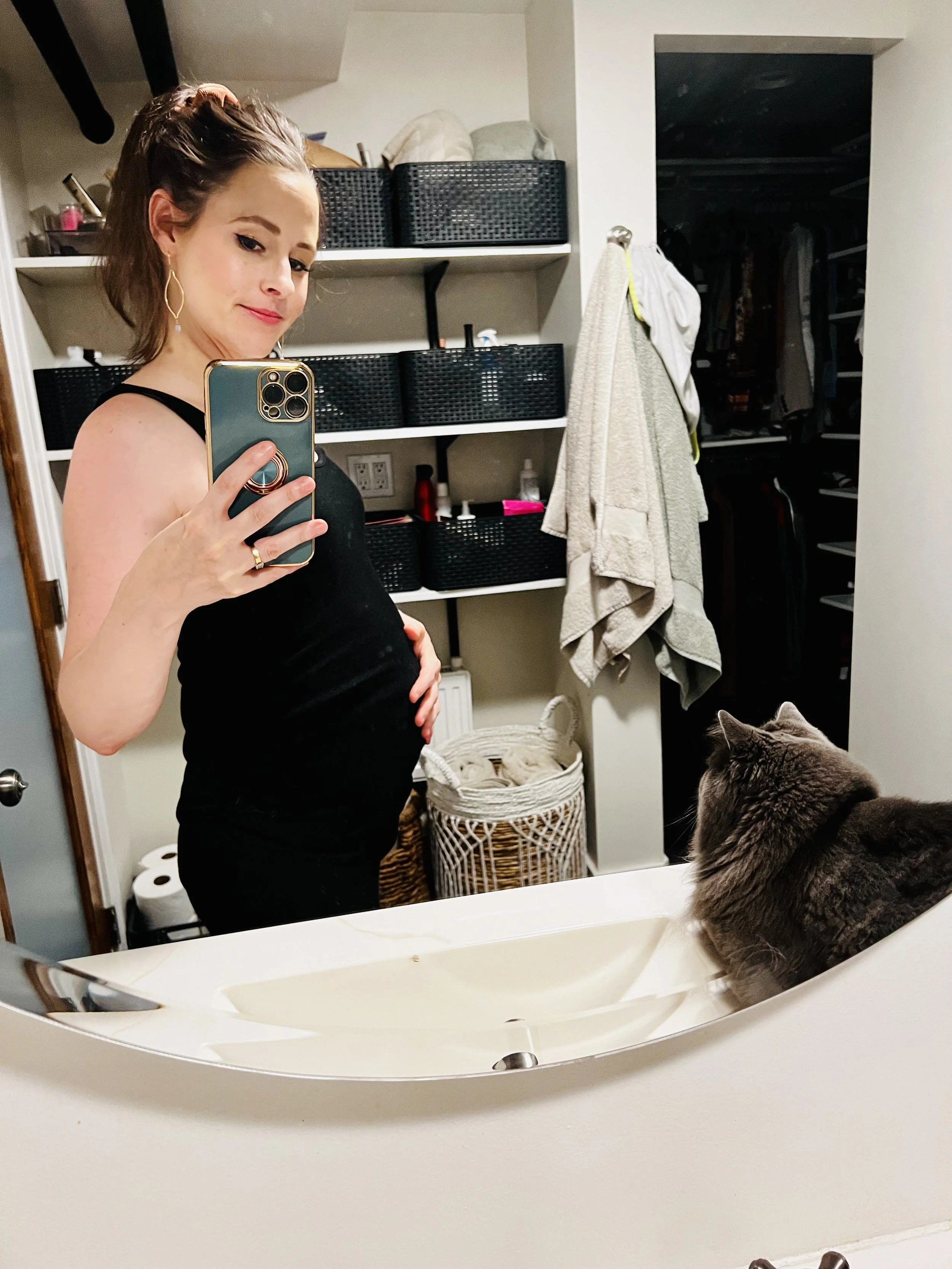
I got pregnant in early 2021, and the first 16 weeks were an absolute nightmare.
Not 6 weeks. Not 8 weeks. Sixteen weeks of nausea, exhaustion, and feeling like I was climbing a physical mountain that had no top. Every single day felt impossible.
The smell of hot sauce made me gag. The thought of a green smoothie made me want to cry. Eggs? Absolutely not. Salmon? Are you kidding me? Salad? I couldn't even look at lettuce without feeling sick.
Instead, I survived on an all-day grazing strategy that involved eating foods of the same color and texture in rapid succession.
Here's what a typical day looked like:
Morning: Ginger ale to settle my stomach
Breakfast: Force down some eggs or toast (barely)
30 minutes later: Pretzels
10 minutes of relief: Feel slightly better
Lunch: A bowl of tortellini
30 minutes later: More pretzels
Afternoon: Maybe some crackers or another round of tortellini
Dinner: Pizza or pasta (basically the only things that didn't make me want to die)
This went on for four months.
The Clam Chowder Incident
At one point, I took a leap. My entire pregnancy I’d been aware of how important zinc is during pregnancy. Zinc supports immune function, cell growth, and fetal development. It's critical, and I was definitely not getting enough of it from my pretzel-and-tortellini diet.
So I decided to be a good prenatal nutrition student and make clam chowder. Clams are one of the most zinc-rich foods you can eat.
I made the chowder. I ate a bowl. And within 20 minutes, I threw it all up.
Ironically, it was the only time during my entire first trimester that I got any relief from the nausea. Throwing up the clam chowder made me feel better for about an hour. Go figure!
But here's what I learned from that experience: Your body knows what it needs, even when it doesn't make sense on paper. My body was rejecting clams, not because clams are bad, but because my body was not interested in processing shellfish while it was busy building a human. And that was okay.
The plan didn't matter. The perfect nutrient intake didn't matter. What mattered was that I was eating enough to survive, and my baby was getting what she needed.
Baby’s Thumbs Up
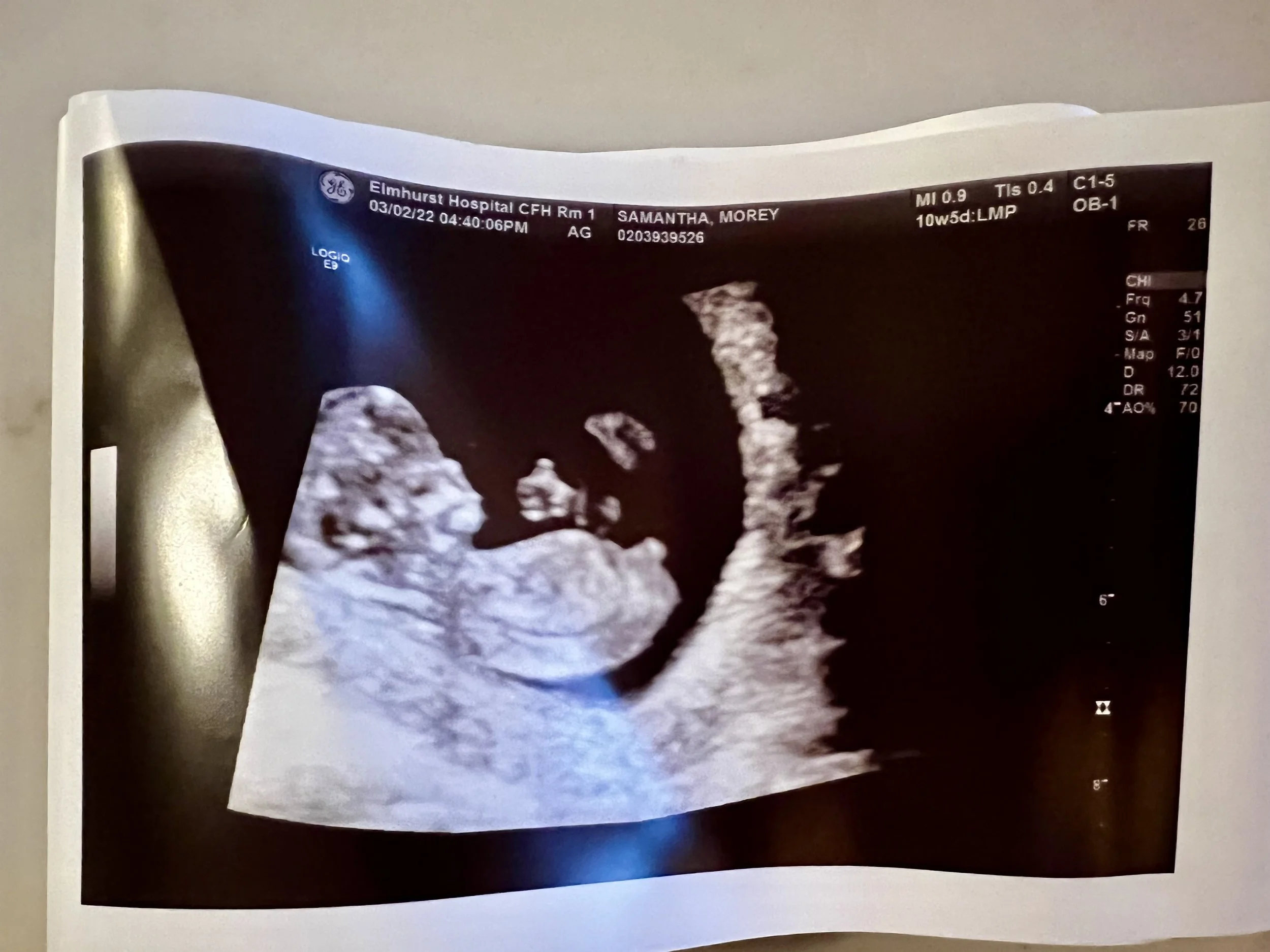
At my first ultrasound, the tech turned the screen toward me and there was my daughter, clear as day, giving a thumbs up.
I'm not kidding. Her little hand was up in a perfect thumbs-up position, like she was saying, "Mom, I'm good. Relax."
I took it as a cosmic sign that she was doing just fine in there on her diet of pizza, tortellini, and pretzels. She didn't need me to eat kale every day or force down salmon when the thought of it made me want to vomit. She needed me to eat what I could tolerate so she could keep growing.
And she did. She was born perfectly healthy, and she's now a thriving, hilarious toddler who loves food (especially carbs, naturally).
Second Trimester Shift
Around week 16, something shifted. The nausea started to lift. I could smell food again without wanting to die. And suddenly, I wanted all the things I couldn't eat during the first trimester.
Smoothies made a comeback. I started craving salads - actual, big, leafy salads with chicken and cheese and all the toppings. I wanted oats for breakfast. I could eat eggs again without gagging. I was able to get back to eating in a way that aligned with my whole-foods, hormone-supportive philosophy.
But I'm so glad I didn't force it during those first 16 weeks. Because if I had, I would have been miserable, stressed, and probably not eating enough. And none of that would have been better for my baby than just eating the damn pretzels.
What I’d Do Differently
If I could go back and talk to my newly pregnant self, here's what I'd say:
Stop trying to eat perfectly. Your body is doing something extraordinary, and it gets to call the shots right now. If it wants carbs, eat carbs. If it rejects all the "nutrient-dense" foods you planned to eat, that's okay. You're not failing.
Trust your body over the plan. I thought I had to follow Lily Nichols' guidelines to the letter or my baby wouldn't develop properly. But my body had different ideas, and my baby turned out just fine. Your body knows what it's doing, even when it doesn't make sense. And there are some wonderful prenatal vitamins to support your pregnancy.
Pre-conception nutrition matters, but pregnancy survival is valid too. Yes, I'm a huge believer in preparing your body for pregnancy with nutrient-dense eating. That's why I teach it. But once you're pregnant, especially in the first trimester, the goal is survival. Eat what you can tolerate. Don't beat yourself up for not eating kale.
Let go of the perfectionism. This was my biggest lesson. I spent so much energy trying to force my body to cooperate with my plan, and all it did was make me more stressed. When I finally let go and just ate what sounded tolerable, everything got easier.
The Bottom Line
Pre-conception nutrition is important. Eating a nutrient-dense, whole-foods diet in the months (or years) before you get pregnant can absolutely set you up for a healthier pregnancy. That's why I recommend focusing on getting enough protein, supporting your blood sugar, and building up your nutrient stores before you conceive.
But once you're pregnant? All bets are (potentially) off.
If your body is demanding pizza and rejecting salmon, listen to it. If you can't stomach vegetables for four months, that's okay. If the only thing that sounds remotely edible is pretzels, eat the pretzels. Your baby will be fine. You will be fine. And eventually, your appetite will come back and you'll be able to eat in a way that feels more aligned with your values.
But in the meantime, give yourself permission to just survive. That's enough.
If you're preparing for pregnancy and want support with your nutrition and hormone health before you get pregnant, I'd love to work with you.
I offer free discovery calls where we can talk through where you are, what your body needs, and whether my 6-month coaching program is the right fit.
If you liked this post, you may also like:
→ 11 Signs of Hormonal Imbalance in Women
→ Why Eating More Might Be the Key to Getting Your Period Back
About the Author
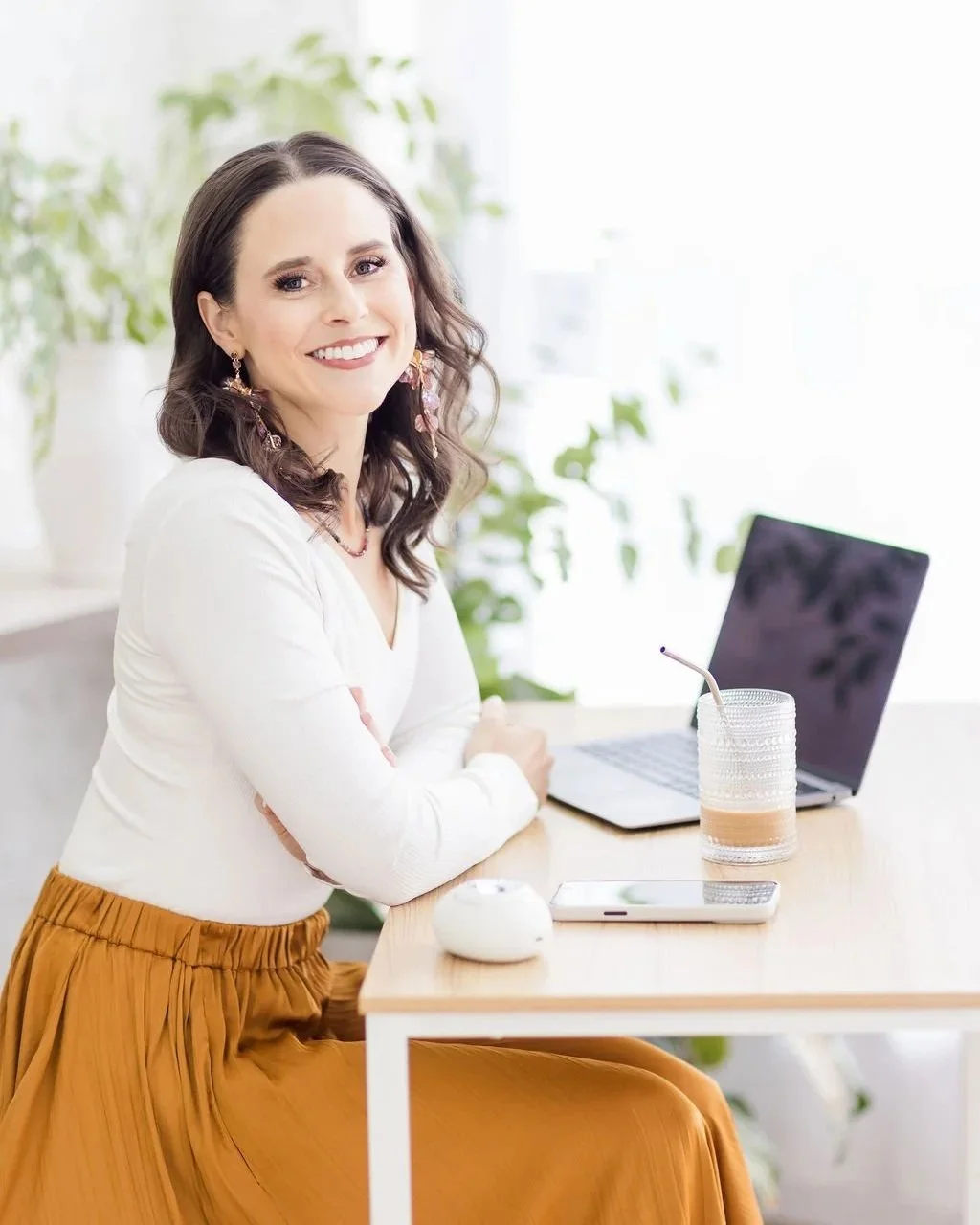
Hi, I’m Sam.
I help women whose hormones have been disrupted by stress or birth control reclaim rhythm and trust in their bodies. With lived experience, deep training, and a non-restrictive, nervous-system-friendly approach, I guide you to restore hormonal balance without control or restriction.