

Bloating, constipation, and gut issues before your period aren't random - they're hormonal. Here's what your digestion is telling you about your cycle.
Most of us don't talk about poop. And until I was well into my own hormone health journey, I didn't fully understand why it mattered so much, especially for women. (It matters a lot. Like, more than anyone warned us in health class. Which, to be fair, was not a high bar if yours was also taught by your gym teacher.)
Here's the short answer: yes, poor gut health can cause hormonal imbalance, and the reverse is equally true. Your gut and your hormones are in constant two-way conversation. When digestion slows, estrogen that should be leaving your body gets reabsorbed instead, which can throw off your entire cycle. And when your hormones shift across the month, your gut feels it in real time.
What nobody tells you is that the bloating before your period, the constipation in your luteal phase, the loose stools at the start of your bleed…these aren't random digestive inconveniences. They're your hormones showing up in your gut, exactly on schedule.
This post is going to walk you through why that happens, what it means for your cycle health, and, critically, what to actually do about it that goes beyond another probiotic recommendation.
Can Poor Gut Health Actually Cause Hormonal Imbalance?
Poor gut health can directly disrupt estrogen balance, progesterone signaling, thyroid function, and cortisol regulation, making it one of the most underappreciated drivers of hormonal symptoms in women. The mechanism isn't mysterious: it's biology.
Your gut microbiome (the trillions of bacteria, fungi, and other microorganisms living in your digestive tract) does far more than digest food. Within it lives a specific community of bacteria called the estrobolome, which is responsible for metabolizing and regulating how estrogen moves through your body. When the estrobolome is healthy, used estrogen gets packaged for excretion through the liver and gut. When it's disrupted (through stress, antibiotics, a diet low in fiber, or hormonal birth control) an enzyme called beta-glucuronidase reactivates that estrogen, sending it back into circulation rather than out of the body. ["2018 review on the estrobolome and its role in estrogen metabolism and hormonal health, Maturitas"]
The result is estrogen dominance, a state in which estrogen is high relative to progesterone, which can look like heavy or painful periods, worsening PMS, breast tenderness, hormonal acne, and mood changes in the luteal phase. All from a gut that wasn't given what it needed. Your hormones didn't go rogue. They just didn't get the support to do their job.
How Your Cycle Affects Your Digestion (Phase by Phase)
Your digestion changes across your menstrual cycle because your hormones drive gut motility — the speed at which food moves through your digestive tract. This is one of the most cycle-specific patterns women experience, and almost nobody explains it clearly. Which is a shame, because it would save a lot of women from googling their symptoms at 11pm convinced something is seriously wrong. Here’s how to track what your body is doing across each phase of your cycle.
Follicular phase (day 1 through ovulation): Rising estrogen tends to speed gut motility for many women, which means easier, more regular digestion. This is often when you feel lightest and most comfortable digestively. Enjoy it! It's your body's version of a green light.
Ovulation: Some women notice bloating or loose stools around ovulation, which corresponds to the LH (luteinizing hormone) surge and a brief estrogen peak. This is normal and typically short-lived. Not a sign something is wrong, just your body mid-event.
Luteal phase (after ovulation through your period): This is where most women struggle. Rising progesterone (the dominant hormone of the second half of your cycle) directly slows gut motility. Your digestive transit time lengthens, which is why constipation, bloating, and gas are so common in the week or two before your period. This is not a gut problem. It's a progesterone effect. You are not broken; you are luteal.
Menstruation: When progesterone drops at the start of your period, prostaglandins (hormone-like compounds that trigger uterine contractions) also stimulate the bowel. Transit time speeds up again, which is why loose stools or diarrhea at the start of your bleed are extremely common and, again, hormonal rather than digestive in origin. Your body is efficient like that, even when it's inconvenient.
The Gut-Hormone Connection Most Posts Miss: The Post-Pill Factor
One angle that almost no gut-hormone content addresses (and one I see constantly in the women I work with and have experienced first-hand) is what happens to the gut microbiome after stopping hormonal birth control. Nobody warned us about this one. Not our doctors, not our pharmacists, not the little leaflet in the pill packet that everyone throws away unread.
Hormonal contraceptives, particularly combined oral contraceptives containing synthetic estrogen and progestin, alter the composition of the gut microbiome. A 2025 narrative review published in a peer-reviewed sports medicine journal found that hormonal contraceptives may reduce the diversity of beneficial bacteria responsible for producing short-chain fatty acids — compounds that feed the gut lining, regulate inflammation, and support immune function.
What this means practically: Women coming off the pill often experience a period of digestive disruption - bloating, irregularity, shifts in stool consistency - at the same time their cycle is trying to re-establish itself. These two things are connected. A compromised estrobolome after years of synthetic hormones means estrogen metabolism may not be running cleanly, which can contribute to the post-pill hormonal symptoms (acne, mood changes, irregular cycles) that often get attributed to "the pill leaving the system" rather than gut microbiome disruption. Here is more on what post-pill hormonal symptoms actually look like and what's driving them.
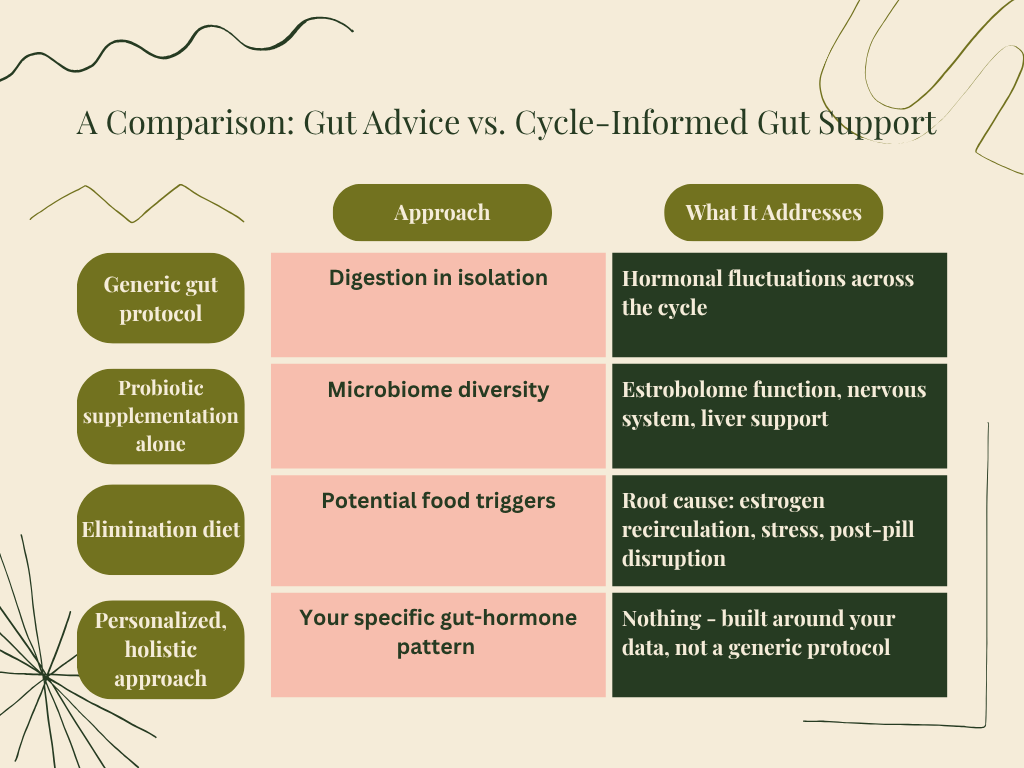
This is one of the most underaddressed pieces of the preconception picture, and it's exactly the kind of pattern that a personalized approach can catch where a generic protocol won't.
Signs Your Gut-Hormone Connection Might Be Off
Your gut and your hormones speak the same language, and when the communication breaks down, symptoms show up in both systems simultaneously. This is the part where most women think they have two separate problems. They don't. They have one pattern showing up in two places.
Digestive signs:
Constipation that reliably worsens in the week before your period
Bloating that lasts for days, not just after a meal
Loose stools or urgency at the start of your bleed
Feeling like digestion is sluggish no matter what you eat
Hormonal signs that often have a gut root:
PMS that feels disproportionately heavy or emotional
Hormonal acne, particularly along the jawline or chin
Breast tenderness before your period
Worsening mood in the luteal phase
Heavy or clotted periods
The pattern worth noticing: If your digestive symptoms track with your cycle, worsening at predictable times of the month rather than randomly, that's not coincidence. That's your gut-hormone axis telling you something specific about what's happening hormonally. Cycle tracking reveals patterns your symptoms alone can't explain.
According to research published in Neurogastroenterology and Motility, women with irritable bowel syndrome (IBS) — a condition strongly influenced by gut-hormone interactions — report significantly worse gastrointestinal symptoms during the luteal phase and menstruation compared to the follicular phase, confirming that hormonal fluctuations directly modulate gut function.

What to Actually Do Beyond the Probiotic Recommendation
Here's where most gut-hormone content loses me: it lands on "eat more fiber and take a probiotic" and calls it a day. And fiber and probiotics are not wrong! But they're incomplete in a way that matters, especially for women navigating hormonal disruption. It's a bit like being handed an umbrella when what you actually need is a roof.
The piece nobody mentions is nervous system regulation. Chronic stress directly impairs gut motility, disrupts the gut microbiome composition, and increases intestinal permeability (often called "leaky gut") by activating the HPA (hypothalamic-pituitary-adrenal) axis and flooding the gut with stress hormones. You cannot out-fiber a nervous system that's been running hot for years. I'll say it louder for the people in the back: your nervous system is connected to both your gut and your hormonal cycle.
Here's what actually supports the gut-hormone axis in women:
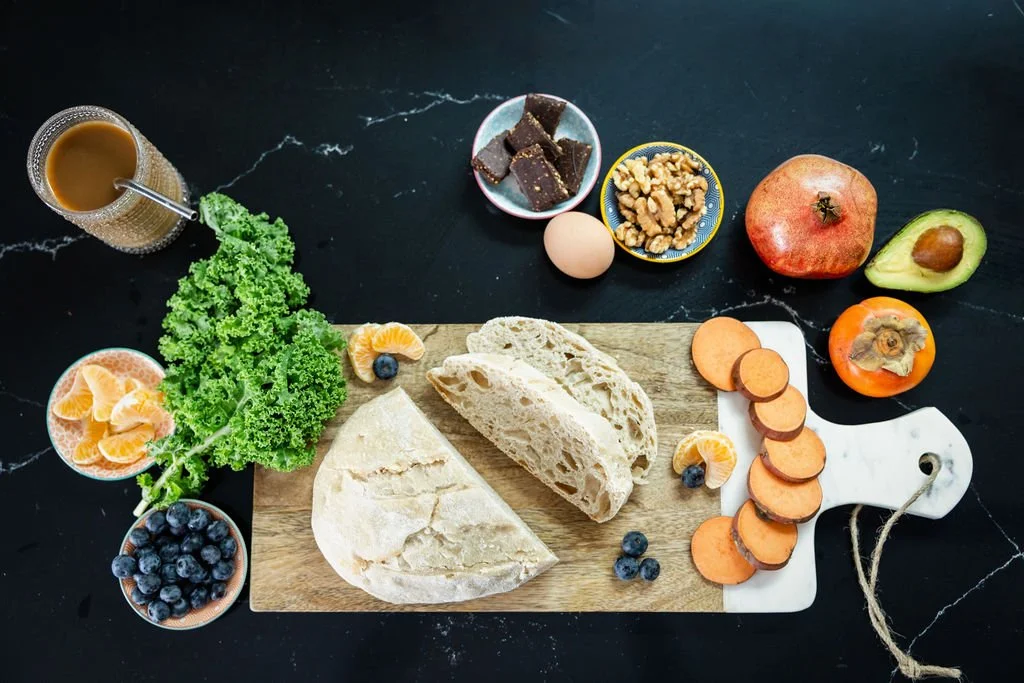
1. Fiber, but specifically for estrogen clearance. Soluble fiber (oats, flaxseed, legumes, cooked vegetables) feeds the beneficial bacteria in the estrobolome and supports healthy estrogen excretion. Insoluble fiber (leafy greens, cruciferous vegetables, fruit with skin) adds bulk and supports transit time. The goal is consistent daily fiber (not a one-time cleanse) because the estrobolome needs a sustained food supply to function.
2. Cruciferous vegetables for liver support. Broccoli, cauliflower, Brussels sprouts, and kale contain a compound called indole-3-carbinol (I3C), which supports the liver's Phase 1 and Phase 2 detoxification pathways responsible for breaking down used estrogen before it reaches the gut. Supporting liver function is not a trendy supplement protocol, it's a dietary pattern.
3. Adequate protein at every meal. Protein supports the liver enzymes involved in estrogen metabolism and helps maintain stable blood sugar - which, when dysregulated, drives inflammation that directly disrupts the gut microbiome. Most women are under-eating protein, particularly at breakfast. [INTERNAL LINK: /hormone-health-blog/the-protein-problem — "how under-eating protein quietly disrupts hormones and gut health"]
4. Fermented foods as a microbiome input. Yogurt with live cultures, kimchi, miso, sauerkraut, and kefir introduce beneficial bacteria to the gut environment. These work best as consistent dietary additions rather than periodic "gut resets."
5. Hydration and gentle movement. Gut motility, the speed of transit through your digestive tract, requires adequate hydration and physical movement. Gentle walks, yoga, and any activity that gets you upright and moving all support peristalsis, the wave-like muscular contractions that move food through the gut.
6. Tracking your gut symptoms alongside your cycle. This is the most underused tool available to you, and it costs nothing. Two cycles of noting your digestive symptoms alongside your cycle phase will almost always reveal a pattern, and that pattern gives you (and anyone supporting you) specific, actionable information rather than a generic recommendation.
FAQs: Gut Health, Hormones, and Your Cycle
Yes, we're going to talk about poop in the FAQ section too!
Q: What are the 7 signs of an unhealthy gut? A: The seven most common signs your gut needs support are: bloating that lingers for days rather than passing after meals; constipation (fewer than one bowel movement daily in functional medicine terms, or fewer than three per week by conventional standards); loose stools or diarrhea that arrive regularly; excessive gas; fatigue that doesn't improve with sleep; skin issues like hormonal acne or eczema; and mood changes including anxiety or low mood. In women, a key additional signal is when any of these symptoms reliably worsen at specific points in your cycle.
Q: How do I reset my gut hormones? A: "Reset" is a compelling word but not quite the right frame. Your gut-hormone axis doesn't need a reset, it needs consistent support over time. The most effective approach combines daily fiber from vegetables, legumes, and seeds to feed the estrobolome; cruciferous vegetables to support liver estrogen clearance; fermented foods for microbiome diversity; adequate protein to fuel detoxification pathways; nervous system regulation to reduce cortisol's disruptive effect on gut motility; and tracking your digestive symptoms alongside your cycle to identify your specific pattern. Two to three cycles of consistent support is typically where women start to see meaningful shifts.
Q: How do you get rid of constipation before your period? A: Luteal phase constipation is driven by progesterone slowing gut motility. So, the fix is less about your gut and more about supporting your body through that hormonal shift. Increase soluble fiber (oats, flaxseed, cooked vegetables), prioritize hydration, add gentle daily movement like walking or yoga, and consider magnesium glycinate in the evening, which supports bowel motility and is commonly low in women with PMS symptoms. If constipation is severe or persistent across multiple cycles, it's worth looking at the fuller hormonal picture.
Q: How to fix luteal phase constipation? A: Luteal phase constipation is a progesterone effect, not a gut dysfunction, and that distinction changes how you approach it. The most effective support combines daily magnesium glycinate (which relaxes smooth muscle and supports bowel motility), consistent soluble fiber, adequate hydration, and gentle movement throughout the luteal phase rather than waiting until you're uncomfortable. Tracking which day of your cycle constipation starts can also help you get ahead of it rather than playing catch-up.
Q: Can GLP-1 medications affect your period? A: Yes. Indirectly, and through a mechanism that's actually relevant to this post. GLP-1 medications like Ozempic, Wegovy, and Mounjaro improve insulin sensitivity and support metabolic health, which can restore more regular ovulation in women with PMOS or insulin resistance, and more regular ovulation means a more consistent cycle. Some women also experience digestive side effects (nausea, slowed gastric emptying) that can affect gut motility and indirectly influence how hormones are metabolized. [INTERNAL LINK: /tirzepatide-while-trying-to-conceive — "the full breakdown on GLP-1 medications and your cycle"] A disrupted gut microbiome impairs the function of the estrobolome, the community of gut bacteria responsible for metabolizing estrogen. When the estrobolome is compromised, used estrogen gets reabsorbed rather than excreted, leading to estrogen dominance, a hormonal imbalance linked to heavy periods, PMS, breast tenderness, and hormonal acne.
Q: Why do I get so bloated and constipated before my period? A: This is a progesterone effect, not a digestion problem. In the luteal phase, the second half of your cycle after ovulation, rising progesterone slows gut motility, the speed at which food moves through your digestive tract. This is why constipation, gas, and bloating are so reliably worse in the week before your period and typically resolve once it starts. You are not broken. You are luteal!
Q: Can stopping the pill affect my gut health? A: Yes - and this connection is almost never discussed. Research suggests hormonal contraceptives alter the composition of the gut microbiome, potentially reducing the diversity of beneficial bacteria. Women coming off the pill often experience digestive disruption alongside hormonal symptoms like acne and irregular cycles, and the two are frequently connected through a compromised estrobolome.
Q: What does the gut microbiome have to do with estrogen? A: The estrobolome, a specific community of bacteria within the gut microbiome, produces an enzyme called beta-glucuronidase, which determines whether used estrogen gets excreted or reabsorbed. A healthy estrobolome keeps estrogen moving out. A disrupted one sends it back into circulation, contributing to estrogen dominance.
Q: What should I eat to support my gut and hormones at the same time? A: Focus on consistent fiber from vegetables, oats, flaxseed, and legumes to feed the estrobolome; cruciferous vegetables to support liver estrogen metabolism; adequate protein at every meal to support detoxification pathways; and fermented foods like yogurt, kimchi, and miso for microbiome diversity. Hydration and gentle daily movement support gut motility across all cycle phases.
Your Gut Isn’t Misbehaving - It’s Communicating
The bloating, the constipation, the digestive shifts that arrive like clockwork before your period - these are not random. They're your body running exactly as designed, with your gut and your hormones in constant conversation about what phase you're in and what you need.And honestly? Once you see that pattern, you can't unsee it. What used to feel like your body randomly betraying you starts to make a lot more sense. Not "my digestion is broken" but "oh, it's day 22 and progesterone is doing its thing." That shift from confusion to clarity is kind of everything.The shift I want to offer you isn't another protocol. It's a different question. Instead of "how do I fix my gut?" try "what is my gut telling me about what's happening hormonally right now?" That reframe changes everything, because it turns symptoms from problems to be solved into data to be understood.If you're ready to map what's actually happening in your gut-hormone axis, with cycle-specific support, real data, and an approach built around your body rather than a generic recommendation, a Hormone Strategy Session is where we start.
Book a Hormone Strategy Session to understand what your gut is telling you about your hormones.
👉 Book a discovery call here
Curious what’s driving your symptoms? Take the free 2-minute Untangle Your Hormones quiz to find your personalized pattern, and a clear next step to start feeling like yourself again.
Last Updated: July 2026

If you liked this post, you may also like:
→ 11 Signs of Hormonal Imbalance in Women
→ Why Eating More Might Be the Key to Getting Your Period Back

About the Author
Hi, I’m Sam.
I help women whose hormones have been disrupted by stress or birth control reclaim rhythm and trust in their bodies. With lived experience, deep training, and a non-restrictive, nervous-system-friendly approach, I guide you to restore hormonal balance without control or restriction.


Perimenopause weight gain isn't a willpower problem. Here's why fasting can backfire and what really helps you feel strong, steady, and at home in your body.