
Low protein intake can disrupt ovulation and hormone balance. Here's what the research says, plus 7 signs you're not getting enough, and why gut health is part of the story too.
Can a Low-Protein Diet Affect Your Period?
It sure can! And I'm about to talk about amino acids with a nerd-level enthusiasm 🙂.
Specifically, the kind of protein that keeps your hormones humming, your energy steady, and your cycle showing up on time (or at least on speaking terms with a schedule).
If you've flirted with veganism (like me, RIP my 24-year-old iron levels), you may have noticed your period acting a little weird. Maybe it got lighter. Maybe your PMS got sharper. Maybe your energy plummeted right when you needed it most, usually mid-Target run or during a super important work meeting, for some reason.
Here's the science: a 2021 study in the Journal of Clinical Endocrinology & Metabolism found that low intake of vegetable protein specifically, not total protein, was linked to differences in reproductive hormone levels across the cycle and a higher risk of sporadic anovulation (a cycle where you don't ovulate), even in women meeting their daily protein needs. So it's not just "eat more protein." It's which kind, and how it's balanced.
Why Protein Matters for Hormones
Protein builds more than muscle. Many of your hormones are made directly from amino acids, protein's building blocks.
Hormones split into two camps. Peptide hormones (insulin, LH, FSH) are built straight from amino acid chains. Steroid hormones (estrogen, progesterone, testosterone) come from cholesterol, but your body still needs protein to build the enzymes that convert cholesterol into those hormones.
There are 9 essential amino acids your body can't make on its own. Miss enough of them consistently, and your body can't build these enzymes and peptide hormones as well. Your cycle notices before your mood does.
Does Protein Increase Estrogen?
Not directly, as it's not an estrogen source. What protein actually does is support the liver enzymes responsible for metabolizing and clearing estrogen properly, plus the gut environment that governs how much estrogen gets reabsorbed versus excreted (more on that below).
The BioCycle study, published in Fertility and Sterility by researchers including S.L. Mumford, found protein intake, specifically animal protein, was inversely associated with testosterone levels in healthy women. So the relationship is real, it's just about balance and clearance, not protein "adding" hormones like a top-up.
7 Signs You’re Not Getting Enough Protein
Full-blown protein deficiency is rare in the U.S. But a mild, chronic shortfall is common, and it's easy to blame on stress, aging, or "just being busy." Per WebMD's clinically reviewed breakdown, here's what to watch for:
Swelling (edema), especially abdomen, legs, feet, or hands. Albumin, a blood protein, keeps fluid from pooling in your tissues.
Mood changes, especially anxiety and depression. Neurotransmitters like dopamine and serotonin are built from amino acids.
Hair, nail, and skin changes. Keratin and collagen, the proteins behind strong hair and smooth skin, need raw material.
Weakness and fatigue, sometimes tied to muscle loss or anemia.
Constant hunger, even after full meals. Protein is your most satiating macronutrient.
Slow-healing cuts or sprains, often a collagen production issue.
Getting sick more, or staying sick longer. Amino acids build antibodies, your immune system's actual soldiers.
If three or more of these sound like your last six months, it's worth a real look at your protein intake, alongside your cycle, not instead of it.
The Gut-Hormone Connection
This part gets skipped in most protein content, and it's genuinely one of my favorite rabbit holes, so let's go there.
Your gut microbiome directly manages estrogen. A specific group of gut bacteria, nicknamed the estrobolome, produces an enzyme called beta-glucuronidase that determines whether estrogen gets reabsorbed into circulation or excreted after your liver processes it [Estrogen-gut microbiome axis review, PubMed].
When gut bacteria diversity drops (dysbiosis), this process misfires, contributing to too much or too little circulating estrogen depending on the imbalance. Digestive enzymes, the workers that break down and absorb nutrients your gut bacteria also rely on, are themselves made of protein. So is the machinery behind healthy stomach acid production.
Translation: if you're under-eating protein, digestion often becomes part of the hormone problem, not a side issue. This is exactly the kind of cross-system detective work I do with clients: gut, blood sugar, and nervous system, all talking to your cycle at once.
Plant Protein vs. Animal Protein: What the Research Shows
Here's a table, because I know some of you are skimmers (no judgment, I am too!)
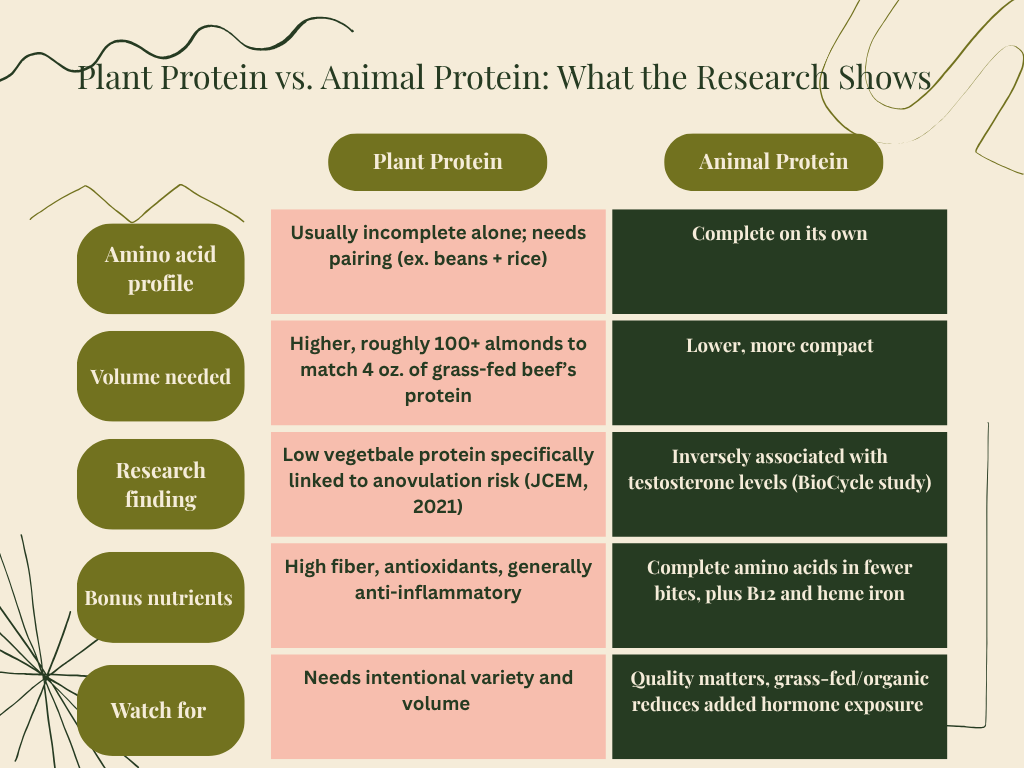
Plant-based diets are genuinely wonderful, high in fiber, antioxidants, anti-inflammatory. The catch: most plant proteins are incomplete alone, meaning they don't have all 9 essential amino acids in sufficient amounts without pairing.
Organic, grass-fed animal protein, when accessible, provides a complete amino acid profile in a smaller, more manageable portion, alongside reduced exposure to added hormones. Neither camp is morally superior. Your cycle is not a referendum on your ethics, it's just data.
If You’re Plant-Based: What Can Help
If you're plant-based and your cycle, energy, or mood have shifted, a few questions are worth real curiosity, not guilt:
Are you intentionally pairing plant proteins (legumes + grains) for a fuller amino acid profile?
Are you eating enough total volume and calories, not just enough "clean" food?
Would a well-formulated plant protein supplement (pea, rice, or a blend) help close the gap on busy weeks?
Your cycle and energy reflect what your body is actually getting. That's information, not a verdict.
The Takeaway
If you are vegan or vegetarian and want to support your hormones well, it just takes more intentional planning to hit your full amino acid needs through variety, volume, or smart supplementation.
If you've been adjusting your diet and your hormones still aren't cooperating, this is exactly the kind of thing I help women untangle in 1:1 coaching, balancing nutrition, hormones, and lifestyle without the guesswork, the spreadsheets, or the restriction.
FAQ’s: Protein and Hormone Health
Q: What are the 7 signs of protein deficiency? A: Swelling, mood changes, hair/skin/nail changes, weakness and fatigue, constant hunger, slow-healing injuries, and getting sick more often. See the full breakdown above.
Q: What foods can trigger hormonal imbalance? A: No single food is the villain, but ultra-processed foods and added sugar (which spike blood sugar and insulin), excess alcohol, and chronically low-calorie or low-protein diets are the patterns most consistently linked to hormone disruption.
Q: Does protein regulate hormones? A: Indirectly, yes. Protein supplies amino acids for peptide hormones and the enzymes that build steroid hormones from cholesterol. It also stabilizes blood sugar, one of the biggest levers for hormone regulation overall.
Q: What foods balance hormones in females? A: A pattern, not a single food: complete protein at each meal, fiber-rich carbs (which feed your gut microbiome), healthy fats (the building blocks of steroid hormones), and avoiding large blood sugar swings from sugar on an empty stomach.
Q: What's the best protein powder for hormonal imbalance? A: There's no universal winner, as it depends on digestion and goals. Look for a short ingredient list, a complete amino acid profile (whey, collagen with added leucine, or a pea + rice blend), and no unnecessary added sugar. My favorite is Just Ingredients.
Q: Does protein make antibodies? A: Yes. Antibodies are proteins (immunoglobulins), built from amino acids. Chronic low protein intake is linked to a weaker immune response.
Q: Are hormones proteins? A: Some are. Peptide hormones (insulin, LH, FSH) are amino acid chains, so technically yes. Steroid hormones (estrogen, progesterone, testosterone, cortisol) are built from cholesterol, not protein, though protein helps build the enzymes that make them.
Q: How much protein do women over 40 need? A: The RDA (0.8g/kg) is a floor to prevent deficiency, not an optimal target. Harvard Health researchers generally recommend 1.2 to 2.0g/kg for most adults [Harvard Health, Building Blocks: protein needs by age], roughly 25-30g per meal, since protein needs rise after 40 as muscle mass naturally declines.
Curious what’s driving your symptoms? Take the free 2-minute Untangle Your Hormones quiz to find your personalized pattern, and a clear next step to start feeling like yourself again.
Last Updated: July 2026

If you liked this post, you may also like:
11 Signs of Hormonal Imbalance in Women
Why Eating More Might Be the Key to Getting Your Period Back

About the Author
Hi, I’m Sam.
I help women restore healthy hormones naturally and rebuild trust in their bodies, whatever brought them here.
Through lived experience, professional training, and a non-restrictive, nervous-system-informed approach, I guide women to understand what's happening in their bodies and how to support real hormonal balance, without control, extremes, or overwhelm.

Perimenopause weight gain isn't a willpower problem. Here's why fasting can backfire and what really helps you feel strong, steady, and at home in your body.