
Natural Fertility & Preconception Prep 101

Last updated: September 2026
This post contains affiliate links and I may earn a small commission at no extra cost to you. I only recommend tools and products I personally use and trust.
Wondering how to prepare your body for pregnancy naturally? Here's what matters, how long it takes, and where to start.
Here's a statistic that might surprise you: according to fertility researcher Dr. Cleopatra Abdou Kamperveen, only about 3% of women have true, irreversible infertility. Three percent!
Which means the vast majority of women who are struggling to conceive, dealing with irregular cycles, or staring down a fertility diagnosis are not broken. They are under-supported. Despite popular modern day thought processes, fertility is plastic, not a static condition.
Natural fertility and preconception prep is not about following a perfect protocol. It's about understanding what your body needs to feel safe enough to ovulate, to sustain a pregnancy, and to thrive. Most conventional medicine skips this part entirely and jumps straight to intervention. This guide doesn't.
Whether you're just starting to think about getting pregnant, actively trying to conceive (TTC), or somewhere in the middle of a confusing fertility journey, this is your starting point. We're going to cover what preconception prep involves, how long it takes, what to look at first, and why so many women are further along than they think.

How Long Does Natural Preconception Take?
Most practitioners recommend starting preconception prep at least 3 to 6 months before trying to conceive, and ideally 9 to 12 months out if you have cycle irregularities or known hormonal imbalances. This is not an arbitrary timeline. It's rooted in the biology of egg development.
Folliculogenesis, the process by which your ovarian follicles develop and mature before ovulation, takes approximately 90 days. That means the egg that ovulates this cycle started developing roughly three months ago. What you do today, nutritionally, hormonally, and physically, is laying the groundwork for eggs that won't be released for another three months.
This is also why quick-fix preconception protocols rarely work. You can't meaningfully shift egg quality, hormonal balance, or nutrient status in two weeks. You can, however, make a significant difference in 3 to 6 months with consistent, foundational support.
The good news: starting earlier gives you more runway, but starting now is always better than waiting. Your body is remarkably responsive when given the right inputs.
What Does “Natural Fertility” Mean?
Natural fertility support means addressing the root causes that affect your body's ability to conceive, rather than bypassing them with external intervention. It includes nutrition, lifestyle, hormone balance, cycle awareness, and reducing the environmental and physiological stressors that disrupt the process.
This is not anti-medicine, and it’s not "just relax and it'll happen." And it is definitely not a judgment of anyone who pursues IVF or other assisted reproductive technologies - in fact, many of my clients are doing just that! It's moreso the recognition that your reproductive system doesn't exist in isolation. It is a downstream state of your overall health, and that overall health is something you have real influence over.
The fertility industry often jumps past this foundational work. That's worth naming. A woman who has never been asked about her sleep, her stress, her relationship to food, or her environmental exposures has not received a complete fertility workup. She's received a starting point for intervention.
Natural preconception prep starts at the foundation.
Why Your Body’s “Readiness” to Conceive Starts With Safety
Your reproductive system is not considered essential for survival by your body. Reproduction is a Tier 3 biological priority, sitting below survival functions like blood sugar regulation and stress response. When your body perceives chronic stress, under-nourishment, or physical strain, it does exactly what it's designed to do: it protects you by deprioritizing reproduction.
This means ovulation is often the first function to be disrupted when the body is under pressure. No ovulation means no progesterone. No progesterone means no fertile window, no implantation support, and often no period. Your body is not malfunctioning. She is protecting you.
Restoring natural fertility, then, is largely about restoring the conditions that make your body feel safe enough to ovulate again. Research published in Frontiers in Global Women's Health (2022) confirms that chronic stress disrupts the hypothalamic-pituitary-gonadal (HPG) axis, resulting in ovulatory dysfunction that can manifest as menstrual irregularities and infertility.
What Are Endocrine Disruptors and Why Do They Matter for Fertility?
Endocrine disruptors are synthetic chemicals that interfere with your body's natural hormonal equilibrium by mimicking, blocking, or altering hormone signals. They are fat-soluble, which means they don't get flushed out of the body easily. They accumulate in fatty tissues over time and continue to exert hormonal effects long after exposure.
This is one of the most underappreciated pieces of the fertility puzzle, and one that conventional testing cannot identify. There is no standard lab panel that measures your overall body burden of endocrine-disrupting chemicals. The impact shows up in symptoms, in cycle irregularities, in hormonal patterns, and in the response (or lack of it) to other interventions.
Common sources of endocrine disruptors include:
Plastics: BPA (bisphenol A) and its replacements BPS and BPF, found in food containers, water bottles, and can linings
Pesticides and herbicides: particularly glyphosate, found on non-organic produce
Personal care products: parabens, phthalates, and synthetic fragrances in conventional skincare, shampoo, and cosmetics
Non-stick cookware: PFAS (per- and polyfluoroalkyl substances), also called "forever chemicals," found in Teflon-coated pans
Household products: flame retardants in furniture and mattresses, synthetic air fresheners, conventional cleaning products
The EWG's Skin Deep database is a helpful starting point for identifying ingredients to research further, though it's worth knowing that some scientists consider their hazard ratings overly cautious. Use it as a first filter, not a final verdict.Swapping out a few high-use products, particularly those you leave on your skin (lotion, deodorant, makeup), makes a meaningful dent in your daily exposure.
Reducing your endocrine disruptor load is not about achieving a zero-toxin life. It's about reducing your overall burden so your body has less to process and can spend more energy on hormone production.

How to Eat to Support Natural Fertility
Nutrition for fertility is not a diet. It is not calorie restriction, food group elimination, or a detox protocol. It is consistent, adequate nourishment that gives your body the raw materials it needs to produce hormones, develop healthy eggs, and maintain the energy required for a pregnancy.
A few principles that matter most:
Eat Enough (This One Comes First)
Your body cannot produce reproductive hormones without sufficient energy. This is non-negotiable. Under-eating is one of the most common, and most overlooked, drivers of cycle disruption in high-achieving women. Signs you may not be eating enough include: feeling hungry within an hour or two of eating, energy crashes in the afternoon, cold hands and feet, hair loss, waking in the middle of the night, and a missing or irregular period.
Eat within an hour of waking to support morning cortisol balance and blood sugar. Don't go more than 4 to 5 hours between meals. Include protein, fat, and carbohydrates at every meal, because all three macronutrients are necessary for hormone production.
Fat Is Not the Enemy
Contrary to the diet culture narrative most of us grew up with, dietary fat is essential for hormone production. Cholesterol is the raw material from which all steroid hormones (including estrogen, progesterone, and testosterone) are made. Many hormonal imbalances are rooted, at least in part, in chronically low fat intake.
The type and quality of fat matters. Prioritize whole food sources of fat: avocado, olive oil, eggs, fatty fish, full-fat dairy if tolerated (A2 dairy is a great alternative), coconut oil, nuts, and seeds. One practical swap that makes a significant difference is removing industrial seed oils, such as canola, soybean, corn, and vegetable oil, from your kitchen. These oils are highly refined, high in omega-6 fatty acids, and pro-inflammatory. Chronic inflammation disrupts hormonal signaling and contributes to cycle irregularities.
Blood Sugar Balance Is Fertility Support
Blood sugar imbalance is one of the most direct disruptors of reproductive hormones, particularly for women with PMOS (formerly PCOS and recently renamed as of May 2026) or insulin resistance. When blood sugar spikes and crashes repeatedly throughout the day, your body releases cortisol to compensate. Cortisol, as we know, suppresses reproductive hormones.
Practical blood sugar support includes: pairing carbohydrates with protein and fat at every meal, eating breakfast before coffee, starting meals with fiber-rich vegetables before moving to protein and then carbs, and taking a 10 to 20 minute walk after meals when possible. A 2022 meta-analysis published in Sports Medicine found that post-meal walking reduced peak blood sugar by an average of 17 to 24% compared to sitting.
The blood sugar and hormone connection you need to know about.
How to Track Your Cycle for Natural Fertility Awareness
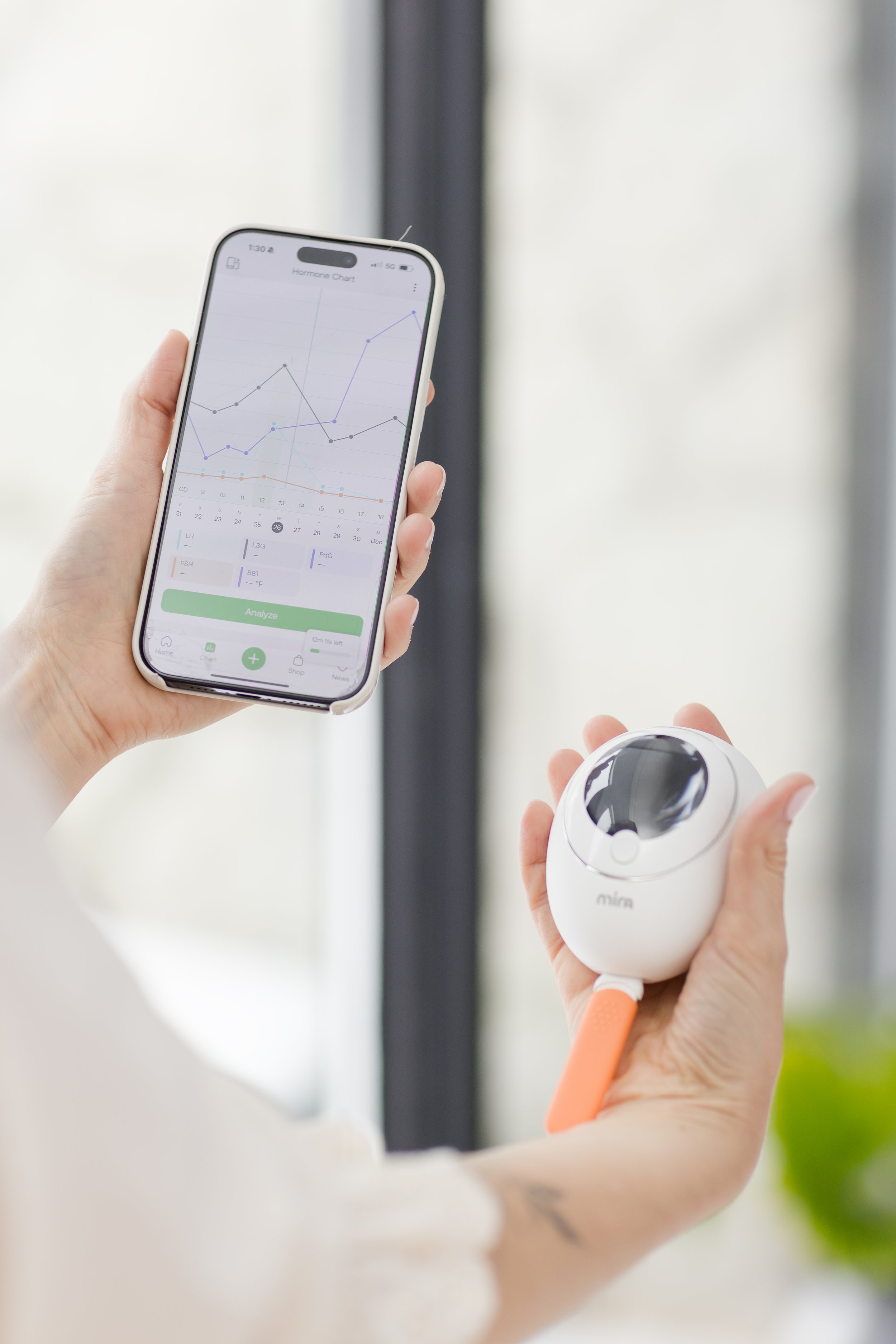
Knowing whether you are ovulating, and when, is the single most important piece of fertility information you can have. You can get a period without ovulating. But you cannot get pregnant without ovulating. And you cannot produce adequate progesterone, which is essential for implantation and early pregnancy, without ovulating.Cycle tracking is not about stress or obsession. It's about gathering data that your body has been trying to share with you all along.
There are several reliable methods for tracking ovulation:
Basal Body Temperature (BBT): Your resting temperature rises slightly (0.2 to 0.5 degrees Fahrenheit) after ovulation due to the rise in progesterone. Tracking this consistently over several cycles confirms whether ovulation is occurring and gives you a picture of your luteal phase length. The Tempdrop wearable thermometer takes your temperature while you sleep, which removes the "must take it before getting out of bed" stress. Admittedly I could never figure out how to track with an old fashioned thermometer and Tempdrop is a game changer!
Cervical Mucus Observation: Cervical mucus changes throughout your cycle in response to estrogen and progesterone. Wet, stretchy, egg-white cervical mucus signals that ovulation is approaching. Learning to observe and record this pattern is a powerful, free fertility awareness method.
The Mira Hormone Monitor: The Mira fertility tracker measures actual hormone metabolites in urine, including LH (luteinizing hormone, which triggers ovulation), estrogen, and progesterone metabolites, with clinical-grade accuracy at home. This is particularly useful if you're coming off hormonal birth control, have irregular cycles, or want more precision than BBT alone provides. Use code 2SAMOREY20 for 20% off.
The method you use matters less than consistency. Two to three cycles of tracking gives you and a practitioner meaningful data to work with.
Here’s more on how to start tracking your cycle without the overwhelm.
What Labs Should You Request Before TTC?
Standard OB/GYN panels often miss the markers most relevant to fertility and hormonal health. Knowing what to ask for, and what the optimal ranges are (which differ from standard "normal" ranges), can save you months of guessing.
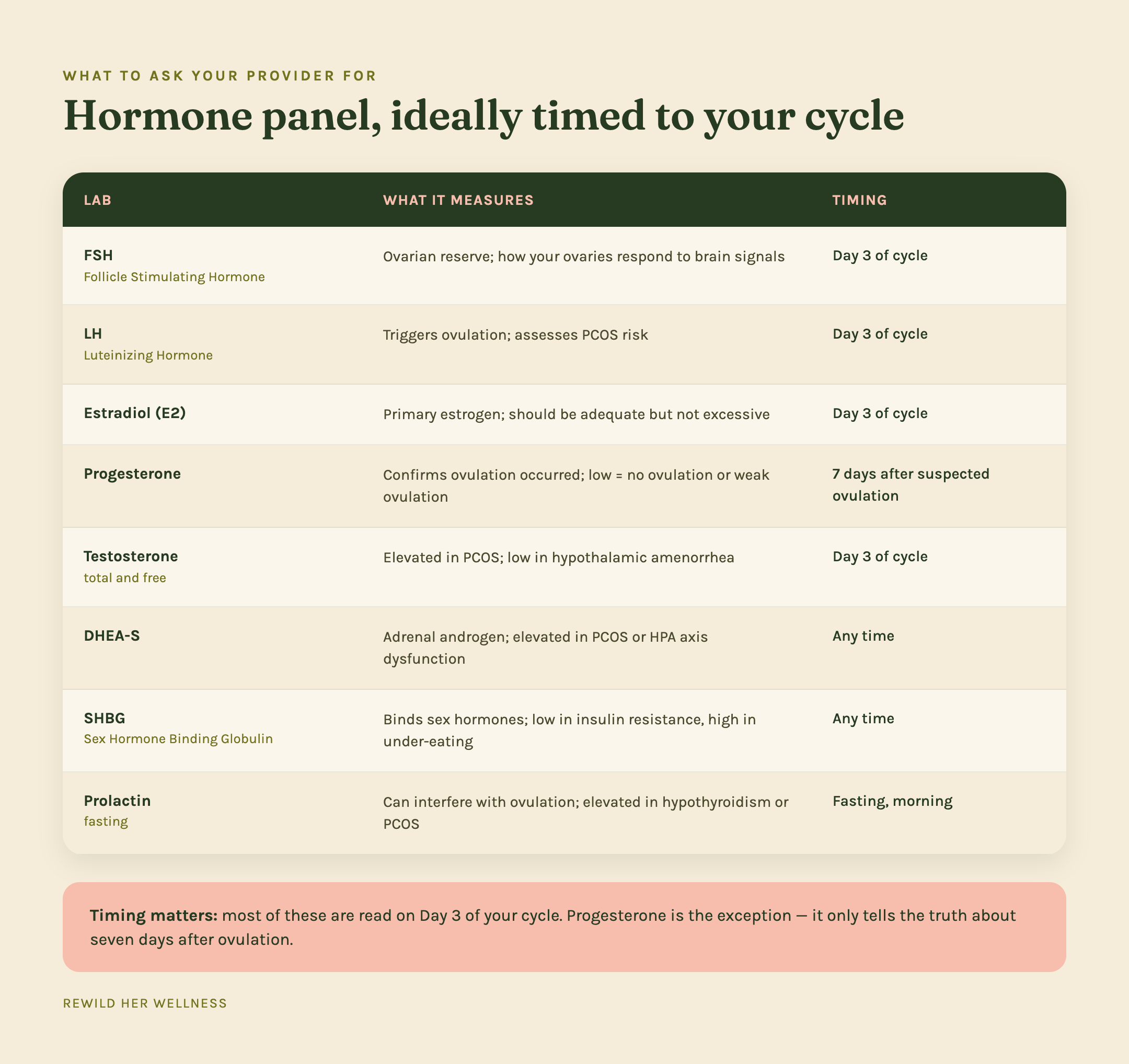
Full Thyroid Panel (not just TSH): TSH alone is not enough. Ask specifically for Free T3, Free T4, Reverse T3, TPO antibodies (thyroid peroxidase), and TgAb (thyroglobulin antibodies). TSH should ideally be between 1 and 1.5 for optimal fertility. Total thyroid values can appear normal while free levels are low, which is why women are so often told their thyroid is "fine" when it is not.
Metabolic Markers: Fasting glucose (ideally under 90 mg/dL for hormone health), fasting insulin (ideally under 5 to 7 uIU/mL), and HbA1c (3-month blood sugar average; optimal under 5.3%) are rarely ordered unless you have a diabetes diagnosis, but are some of the most important markers for hormonal and fertility health.
Nutrient Levels: Vitamin D (optimal for fertility: 40 to 60 ng/mL), ferritin (ideally 70 to 100 ng/mL for fertility; low iron is a common and frequently missed cause of missing periods and fatigue), B12, and folate.
An important note: many conventional providers will review these results and tell you everything looks normal. Optimal ranges for fertility are different from standard population reference ranges. If you are getting "normal" results but not feeling well or not cycling regularly, the numbers may be technically within range but not where they need to be for your body to thrive.
What Does a Natural Preconception Prep Timeline Look Like?
The most effective preconception prep happens in layers, not all at once. Here is a general framework based on how far out you are from TTC:
9 to 12 Months Before TTC: Build the Foundation
This is the time to restore your cycle if it's missing or irregular, address blood sugar and HPA axis dysregulation, reduce endocrine disruptor exposure, and get your labs done. Focus on eating enough, moving in ways that feel good rather than depleting, sleeping 7 to 9 hours, and getting morning sunlight to support your circadian rhythm and cortisol pattern.
If your period has been missing for more than 6 months, this is the phase where working with a knowledgeable practitioner, whether a functional medicine doctor, naturopath, or hormone health coach, makes the biggest difference. Trying to DIY cycle restoration is possible, but personalized support compresses the timeline considerably.
3 to 6 Months Before TTC: Fine-Tune and Add Targeted Support
Confirm ovulation is occurring regularly. This is when cycle tracking becomes essential. Start a high-quality prenatal vitamin with methylated folate (not folic acid, which requires a conversion step many women cannot do efficiently), adequate B vitamins, and bioavailable minerals. Add an omega-3 supplement if you're not regularly eating fatty fish. Support gut health through probiotic-rich foods like yogurt, kefir, and sauerkraut.
1 Month Before TTC: Check In and Confirm
Retest any labs that were suboptimal earlier. Confirm you feel energized, are sleeping well, and are seeing regular cycles with clear ovulation signs. Track your cycle closely so you know your fertile window. This is also a meaningful time to connect with your partner about the journey ahead.
When Is It Time to Seek Additional Support?
Natural preconception prep is a powerful starting point, but it is not a replacement for medical care when red flags are present. Seek evaluation from a reproductive endocrinologist or OB/GYN if you experience:
Severe pelvic pain at any point in your cycle
Bleeding that soaks through a pad or tampon every hour, or lasts more than 7 days
A history of pregnancy loss
A diagnosis of endometriosis or PCOS that has not responded to foundational support
No pregnancy after 12 months of trying (or 6 months if you are over 35)
Consider working with a hormone health coach if your period has been missing for 6 or more months and you're not sure where to start, you've tried addressing diet and lifestyle on your own without progress, or you're overwhelmed by the volume of conflicting information online and need a personalized, evidence-based path forward.
FAQs: Natural Fertility & Preconception Prep
Q: How long does preconception prep take before trying to conceive? A: Most practitioners recommend starting 3 to 6 months before TTC, and 9 to 12 months if you have cycle irregularities or hormonal imbalances. This aligns with the 90-day follicle development cycle, meaning what you do now influences the eggs that will be available in about three months.
Q: Can you support fertility naturally if you've been diagnosed with PCOS or HA? A: Yes, in most cases. Both PCOS (polycystic ovary syndrome) and HA (hypothalamic amenorrhea) are highly responsive to lifestyle, nutrition, and stress support. They are not static diagnoses. Many women with both conditions restore regular ovulation and go on to conceive naturally with the right foundational support.
Q: What should I eat to prepare my body for pregnancy? A: The most important nutritional foundation for fertility is eating enough consistently, balancing blood sugar by pairing protein, fat, and carbohydrates at every meal, and prioritizing high-quality dietary fats. There is no single fertility superfood, but under-eating, skipping meals, and avoiding fat are among the most common nutritional patterns that disrupt hormones.
Q: Do endocrine disruptors actually affect fertility? A: Yes. Endocrine disruptors, synthetic chemicals found in plastics, pesticides, personal care products, and cookware, interfere with hormonal signaling and accumulate in body fat over time. They cannot be identified through standard lab testing, but their effects show up in cycle irregularities, hormonal imbalances, and reduced fertility. Reducing exposure through food storage choices, cleaner personal care products, and filtered water is one of the most underutilized preconception strategies.
Q: Is cycle tracking necessary for natural fertility? A: Cycle tracking is one of the most valuable, low-cost tools available for fertility awareness. It confirms whether ovulation is occurring, helps identify your fertile window, and provides data that is genuinely useful for both self-understanding and working with a practitioner. You don't have to track everything. But knowing whether you're ovulating is foundational.
Q: What's the difference between "normal" lab results and optimal fertility labs? A: Standard lab reference ranges are based on population averages, not on what's optimal for hormonal health or fertility specifically. For example, TSH between 1 and 1.5 is associated with optimal fertility outcomes, but the standard range extends to 4.5. Ferritin above 70 ng/mL is ideal for cycle health, but many labs flag anything above 12 ng/mL as normal. Working with a practitioner who interprets results in the context of your symptoms and fertility goals, not just population averages, matters.

You are not starting from zero
Here's what I want you to hear before you close this tab: you are not starting from scratch. Your body has been working on your behalf this whole time. The symptoms you've been experiencing, the irregular cycles, the fatigue, the PMS, are not signs of a broken system. They are information. Your body has been asking for support in the only language she knows.
Natural preconception prep is the process of listening to that language and responding.
If you'd like to understand your own hormonal picture more clearly, the free hormone quiz is a good starting place!
👉Take the free hormone quiz to identify your primary hormonal pattern
And if you're ready for personalized, evidence-based support on your preconception journey, a discovery call is the first step.
👉Book your free discovery call with Sam
Last Updated: September 2026
If you liked this post, you may also like:
How Leptin Supports Healthy Ovulation & Fertility
How Femtech and Hormone Tracking Can Help You Understand Your Cycle
Nervous System Regulation for Better Hormones
Does Stress Actually Affect Fertility (Yes - Here’s How)
Are Your Hormones Affecting Your Fertility?
Can I Take Tirzepatide While Trying To Conceive?

About the Author
Hi, I’m Sam.
I help women whose hormones have been disrupted by stress or birth control reclaim rhythm and trust in their bodies. With lived experience, deep training, and a non-restrictive, nervous-system-friendly approach, I guide you to restore hormonal balance without control or restriction.



Wondering how to prepare your body for pregnancy naturally? Here's what actually matters, how long it takes, and where to start.