
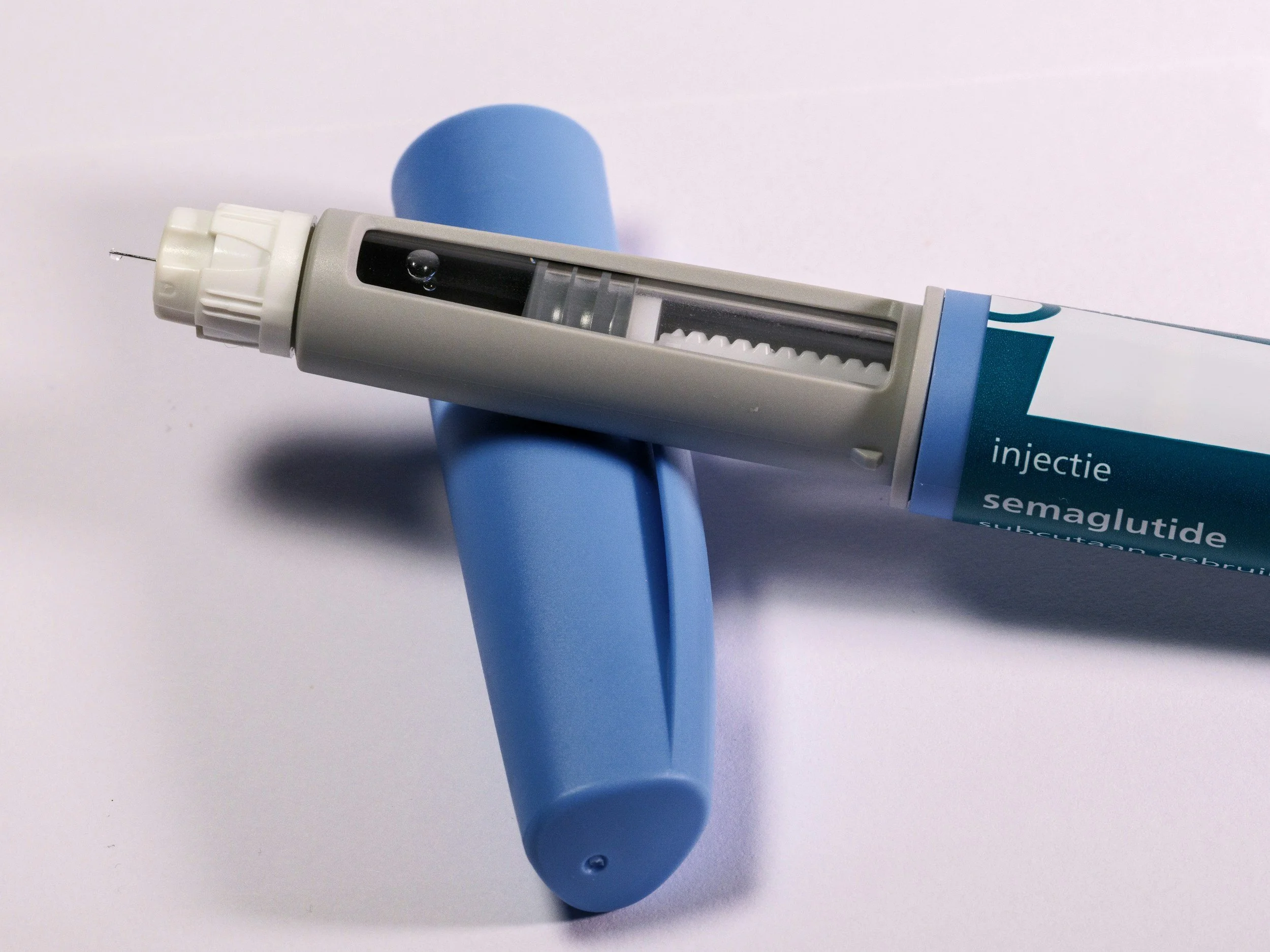
A note before we begin: This post is for educational purposes only and is not a substitute for medical advice. If you are taking or considering a GLP-1 medication, please work with a qualified healthcare provider before making any changes.
Thinking about tirzepatide and fertility? Here's what the research says about GLP-1s, ovulation, and when to stop before TTC.
You've heard the headlines. "Ozempic babies." Women who'd spent years trying to conceive (some who'd stopped believing it was possible), suddenly finding themselves pregnant after starting a GLP-1 medication. And now you're wondering: could tirzepatide help me? Or does being on it mean I need to pause my fertility plans entirely?
The honest answer is: both things can be true at once.
GLP-1 receptor agonists — a class of medications that includes tirzepatide (brand names Mounjaro and Zepbound) and semaglutide (Ozempic and Wegovy) — are not fertility drugs. They should not be taken during pregnancy, and current guidance recommends stopping them at least one to two months before actively trying to conceive. But the metabolic improvements they create can indirectly set the stage for better hormonal health and more regular ovulation — especially in women with PCOS or insulin resistance.
This post is here to help you sort through the noise, understand what the research actually says, and figure out what this means for your specific situation and fertility journey.
What Is Tirzepatide, and How Is It Different From Semaglutide?
Tirzepatide (Mounjaro, Zepbound) is a dual GIP/GLP-1 receptor agonist — meaning it activates two hormone receptors, GIP (glucose-dependent insulinotropic polypeptide) and GLP-1 (glucagon-like peptide-1), rather than one. Semaglutide (Ozempic, Wegovy) activates only the GLP-1 receptor. Both medications work by mimicking naturally occurring gut hormones that regulate blood sugar, slow gastric emptying, and reduce appetite.
Tirzepatide's dual mechanism means it tends to produce more significant weight loss and metabolic improvements compared to semaglutide alone, which is relevant for fertility — because much of GLP-1's potential impact on reproduction is metabolic and indirect, not hormonal and direct. I dive deeper into how blood sugar imbalance shows up in your hormones and cycle in this post if you’d like to explore that connection further.
In terms of reproductive safety, tirzepatide and semaglutide carry similar precautions. Neither is approved for use during pregnancy, and both are contraindicated while breastfeeding. The difference lies in one additional detail: because tirzepatide can impair the absorption of oral contraceptives, women taking it who are not trying to conceive are advised to use non-oral contraception. ["MHRA guidance on GLP-1 medications and contraception, June 2025"]
Should You Stop Tirzepatide Before Trying to Conceive?
Yes — current guidance is clear on this. Tirzepatide and semaglutide should be stopped at least one to two months before trying to conceive. The MHRA (the UK's Medicines and Healthcare products Regulatory Agency), in guidance published June 2025, stated that GLP-1 receptor agonists should not be taken during pregnancy, just before trying to conceive, or while breastfeeding, specifically because there is not yet enough safety data to confirm whether these medications can cause harm to a developing baby.
Animal studies have shown potential risks including fetal growth restriction at doses similar to those used in humans, which is why prescribers err on the side of caution. Human data is still limited, not because we know these drugs are dangerous in pregnancy, but because we simply don't have enough information yet to say they're safe. ["2025 review on GLP-1 receptor agonist safety data during pregnancy, Diabetes Obesity and Metabolism"]
The practical takeaway: if you're actively in your trying-to-conceive window, a GLP-1 medication is not something to continue. But stopping doesn't mean the benefits disappear…and this is where the conversation gets more nuanced. There are a myriad of holistic ways to support your metabolic health during the preconception window without medication.
How GLP-1 Medications Can Actually Support Fertility (Before You Stop Them)
GLP-1s are not fertility drugs. But they can create the metabolic conditions your body needs to ovulate more consistently — and that distinction matters enormously, especially for women with PCOS or insulin-resistant patterns. (You may also see this condition referred to as PMOS — polyendocrine metabolic ovarian syndrome — its newly official name as of May 2026, following a global consensus process published in The Lancet. The rename reflects exactly what we're talking about here: this is a metabolic condition, not just a gynecological one.)
Here's the mechanism: GLP-1 receptor agonists improve insulin sensitivity (your body's ability to use glucose efficiently) and support significant weight loss in women where excess adipose tissue has been disrupting hormone balance. Because insulin resistance is one of the primary drivers of anovulation (the absence of ovulation) in PCOS, correcting that metabolic dysfunction can restore regular cycles in women who haven't had them in years.
A 2025 analysis by Truveta found that prescribing of semaglutide or tirzepatide in women with PCOS increased more than sevenfold between 2021 and 2025 — from 2.4% to 17.6% of women with the diagnosis — reflecting the growing clinical recognition of these medications as metabolically relevant for this population.
Some fertility specialists have also begun using GLP-1 therapy as part of a preconception or pre-IVF plan for women with obesity or insulin resistance, with the goal of improving metabolic health before stopping the medication and entering an active trying-to-conceive window. This is not a standard protocol, but it reflects the direction the clinical conversation is moving. What we do know for certain is how insulin resistance quietly disrupts your cycle, and working on healthy blood sugar levels through diet and lifestyle changes makes a huge impact on the health of your cycles and fertility.
The “Ozempic Baby” Phenomenon - What’s Actually Happening
The "Ozempic baby" trend (unexpected pregnancies in women taking semaglutide or tirzepatide) is real, and it makes biological sense. For many women, these pregnancies weren't planned. They happened because GLP-1 medications improved insulin sensitivity and metabolic function, which restored ovulation in women who had experienced anovulatory cycles, often for years. Women who thought they couldn't conceive suddenly could.
There's a second factor worth knowing: tirzepatide can reduce the absorption of oral contraceptives by slowing gastric emptying. This means that for women on the pill who weren't thinking about contraception carefully, the medication may have reduced contraceptive efficacy at the same time it was restoring ovulation. Two things happening simultaneously that nobody warned them about.
If you are taking tirzepatide and are not trying to conceive, non-oral contraception is recommended. If you are trying to conceive, this same mechanism is part of why your body may be becoming more responsive — and why stopping the medication before actively trying is the right call, not a setback. This is where Femtech devices like Mira can help track your cycle after stopping a GLP-1 medication.
A Note on Where I Stand - Because It Matters
I want to pause here and be honest with you about something, because I think it's important.
GLP-1 medications are real tools with real clinical applications — particularly for women with PCOS, insulin resistance, or metabolic dysfunction that has been genuinely disrupting their cycles. I am not here to demonize them, and I'm not going to tell you what to do with a prescription because that's between you and your doctor.
But I also need to name what I see happening in the broader cultural conversation around these drugs: they are increasingly being prescribed not for metabolic health, but for aesthetics. For "summer bodies." For the belief — one our culture reinforces constantly — that a smaller body is a more worthy body, and that a more worthy body is a more fertile one.
That is not a belief I share, and it is not the premise of this work.
Your body does not need to be smaller to be capable of pregnancy. Your fertility is not a reward for reaching a number on a scale. And the women I work with are not here to shrink — they are here to understand what their body is actually asking for, and to learn how to respond to it with care rather than force.
GLP-1 medications can, in the right context, support the metabolic conditions that allow ovulation to return. But they are not the only path there — and for many women, they are not the right path at all. Blood sugar stability, nervous system regulation, nourishment, and cycle literacy can create those same conditions without a prescription, when approached with the right support and enough personalized attention to actually address your pattern.
The question I want you to leave this post asking isn't "should I get on a GLP-1?" It's: "Do I actually understand what's been disrupting my cycle — and do I have a plan that addresses that specifically?" If the answer is no, that's where the real work begins.
What Happens to Your Cycle After You Stop Tirzepatide?
This is one of the most common questions I hear, and it deserves a direct answer: the metabolic improvements from GLP-1 medications don't evaporate the moment you stop. If the medication helped normalize your insulin levels, reduce excess androgens, or restore more regular ovulation, those changes can persist, especially if you've also built supportive habits around blood sugar balance, nourishment, and stress regulation during the time you were taking it.
That said, some women do experience a shift in their cycle in the weeks after stopping, particularly if weight changes or metabolic adjustments were central to the medication's effect. This is worth tracking carefully with a cycle monitoring tool like Mira (a quantitative hormone monitor that measures actual LH and estrogen levels) or Natural Cycles, rather than relying on calendar guesses. Nourishment is a key factor here - particularly, signals like leptin connect to ovulation after metabolic shifts.
The preconception window after stopping a GLP-1 is also an ideal time to focus on the fundamentals: blood sugar stability, adequate nourishment, nervous system regulation, and reducing inflammatory load. These aren't consolation prizes — they're the actual conditions your body needs to sustain conception and early pregnancy.
FAQ’s: GLP-1 Medications and Fertility
Q: What happens if I get pregnant while taking semaglutide? A: Stop the medication immediately and contact your healthcare provider. According to clinical trial data reviewed in a 2025 paper in Diabetes, Obesity and Metabolism, pregnancies in women on semaglutide had mixed outcomes — including healthy births, miscarriages, and one congenital abnormality — but there is not enough data to establish causality or safety. Your provider will guide next steps, and a maternal-fetal medicine specialist may be involved.
Q: How long after stopping a GLP-1 can I get pregnant? A: Current guidance recommends waiting at least one to two months after stopping tirzepatide or semaglutide before trying to conceive. This allows the medication to clear your system. Some providers recommend a longer window — up to three months — to also allow your cycle to regulate and your metabolic baseline to stabilize before conception. Always confirm the timing with your prescribing provider.
Q: Has anyone gotten pregnant while on Ozempic? A: Yes — and it's well-documented enough that "Ozempic babies" has become a widely used term. In clinical trials for semaglutide, 40 pregnancies were reported in women taking the medication. The pregnancies occurred because GLP-1 medications restored ovulation in women with metabolic dysfunction, and in some cases reduced the effectiveness of oral contraceptives. These pregnancies were not intended — taking Ozempic while actively trying to conceive is not recommended.
Q: Has anyone gotten pregnant on tirzepatide? A: Yes, though data is more limited than for semaglutide. Tirzepatide's dual mechanism produces stronger metabolic effects, which can restore ovulation in women with PCOS or insulin resistance. Unintended pregnancies have been reported, and the same cautions apply: tirzepatide should not be taken while actively trying to conceive or during pregnancy.
Q: Does GLP-1 affect fertility in women? A: Indirectly, yes — and potentially positively, for women with metabolic dysfunction. GLP-1 medications improve insulin sensitivity and support weight loss, both of which can restore more regular ovulation in women with PCOS or insulin resistance. They do not directly stimulate ovulation like fertility medications (clomiphene or letrozole), but by correcting the metabolic environment that was suppressing ovulation, they can make conception more possible. GLP-1s are not fertility drugs and should not replace a comprehensive, personalized approach to reproductive health.
You Deserve More Than a Protocol Built for Someone Else
Here's what I want you to take from this post — and it's not a medication recommendation.
It's this: your body is not broken. It is responding to something real. Whether that's years of blood sugar dysregulation, a nervous system that hasn't felt safe in longer than you can remember, a hormonal pattern that's never been properly mapped, or a fertility journey that has quietly become one of the most stressful things you've ever experienced — there is a reason your cycle is doing what it's doing. And that reason is findable!
GLP-1 medications can be part of a medically appropriate picture for some women. But a prescription is not a plan. And a plan built around a drug is not the same as a plan built around you.
The women who come to work with me are often exhausted — not from lack of effort, but from effort aimed in the wrong direction. They've tracked, optimized, restricted, supplemented, and researched their way to burnout, and their bodies still don't feel like allies. What they haven't had is someone sit with them long enough to understand the full picture: the cycle data, the metabolic patterns, the stress load, the history, the things nobody thought to connect before.
That's what I do. Not because I have a protocol that works for everyone — but because I don't believe in protocols that work for everyone. I believe in you, specifically.
If you're ready to stop researching and start actually addressing what's been getting in the way, aHormone Strategy Session is where we begin. We'll look at your full picture together — your cycle, your metabolic health, your nervous system, your history — and you'll leave with clarity on what your body actually needs, and a path forward that was built for you.
Not for a trend. Not for a number on a scale. For you.
👉 Book your Hormone Strategy Session - built around you, not a protocol.
Curious what’s driving your symptoms? Take the free 2-minute Untangle Your Hormones quiz to find your personalized pattern, and a clear next step to start feeling like yourself again.
Last Updated: June 2026
If you liked this post, you may also like:
→ How Leptin Supports Healthy Ovulation and Fertility
→ Why Eating More Might Be the Key to Getting Your Period Back

About the Author
Hi, I’m Sam.
I help women whose hormones have been disrupted by stress or birth control reclaim rhythm and trust in their bodies. With lived experience, deep training, and a non-restrictive, nervous-system-friendly approach, I guide you to restore hormonal balance without control or restriction.



Perimenopause weight gain isn't a willpower problem. Here's why fasting can backfire and what really helps you feel strong, steady, and at home in your body.