
Wondering if your hormones are impacting your fertility? Learn the signs, what to do naturally, and when to seek support — before your RE appointment.
Something feels off. Your cycle might be irregular, your energy is unpredictable, and you've been tracking your symptoms long enough to know your body is trying to tell you something. But every time you bring it up, you're told to "just keep trying" or "wait and see."
Here's what's true: hormonal imbalances - disruptions in the balance of estrogen, progesterone, LH, and FSH that regulate ovulation and cycle health - are one of the most common and underaddressed contributors to fertility challenges. And most women don't need to be in a reproductive endocrinologist's office to start addressing them.
Before you get a diagnosis or a referral, there are real, evidence-based steps you can take right now to support your hormonal health and fertility readiness. This post breaks down what to look for and where to start.
What Does It Mean When Hormones Affect Fertility?
Hormonal imbalances disrupt fertility by interfering with ovulation - the process by which a mature egg is released from the ovary each cycle. Without consistent ovulation, conception becomes significantly harder. According to the American Society for Reproductive Medicine (ASRM), ovulatory dysfunction accounts for approximately 25% of all female infertility cases.
The hormones most directly involved are estrogen (which builds the uterine lining and triggers the LH surge), progesterone (which supports implantation after ovulation), LH - luteinizing hormone, which triggers egg release - and FSH, or follicle-stimulating hormone, which drives egg development each cycle.
When any one of these is dysregulated, the whole system feels it. The important part: these imbalances often show up as symptoms long before they appear on standard labs. Your body is already communicating. The goal is learning to listen.
Signs Your Hormones Might Be Affecting Your Fertility
Several common symptoms point to hormonal involvement in fertility challenges - and many women experience them for years without connecting the dots.
Irregular or absent cycles are the most obvious signal. A healthy ovulatory cycle runs between 21 and 35 days, according to the American College of Obstetricians and Gynecologists (ACOG). If yours is consistently shorter, longer, or missing, your body isn't ovulating predictably.
Other signs include mid-cycle spotting, a luteal phase (the second half of your cycle after ovulation) shorter than 10 days, PMS symptoms that feel unmanageable, waking at night, low libido, and persistent fatigue that doesn't resolve with rest. These aren't just inconveniences. They're data points, and they matter enormously when it comes to fertility readiness. I go into more detail in my blog post outlining a full list of hormonal imbalance signs to watch for.
Why “Everything Looks Normal” Doesn’t Mean Your Hormones Are Optimized
Standard fertility bloodwork checks whether your levels fall within a broad reference range, but "normal" on a lab report doesn't always mean optimal for conception. This is one of the most frustrating disconnects women hit when navigating unexplained fertility challenges.
A progesterone level of 5 ng/mL may technically fall within range, but integrative practitioners like Dr. Aviva Romm, a Yale-trained physician and author of Hormone Intelligence, look for levels above 10–12 ng/mL in the luteal phase to reliably support implantation. Thyroid function - specifically TSH, or thyroid-stimulating hormone - is closely tied to fertility, and many integrative practitioners look for levels in a tighter range than standard labs typically flag. Asking your provider for a full thyroid panel (TSH, free T3, free T4) is one of the most practical steps you can take before a fertility workup.
"Normal" is a range. Optimized is a different conversation entirely. I wrote a full post on why doing everything right still isn't moving the needle for your hormones if you’d like to explore this connection further.
What You Can Do Naturally Before Seeing a Reproductive Endocrinologist
1. Track Your Cycle With More Than an App
Cycle tracking like charting basal body temperature (BBT), cervical mucus, and cycle length together, gives you real data about whether and when you're ovulating. This goes far beyond what a period-prediction app like Clue or Flo can offer on its own.
Basal body temperature rises by 0.2–0.5°F after ovulation due to rising progesterone, giving you a clear post-ovulatory thermal shift to watch for each month. Cervical mucus shifts from dry or creamy to clear and stretchy in the days before ovulation - often described as egg-white cervical mucus, or EWCM.
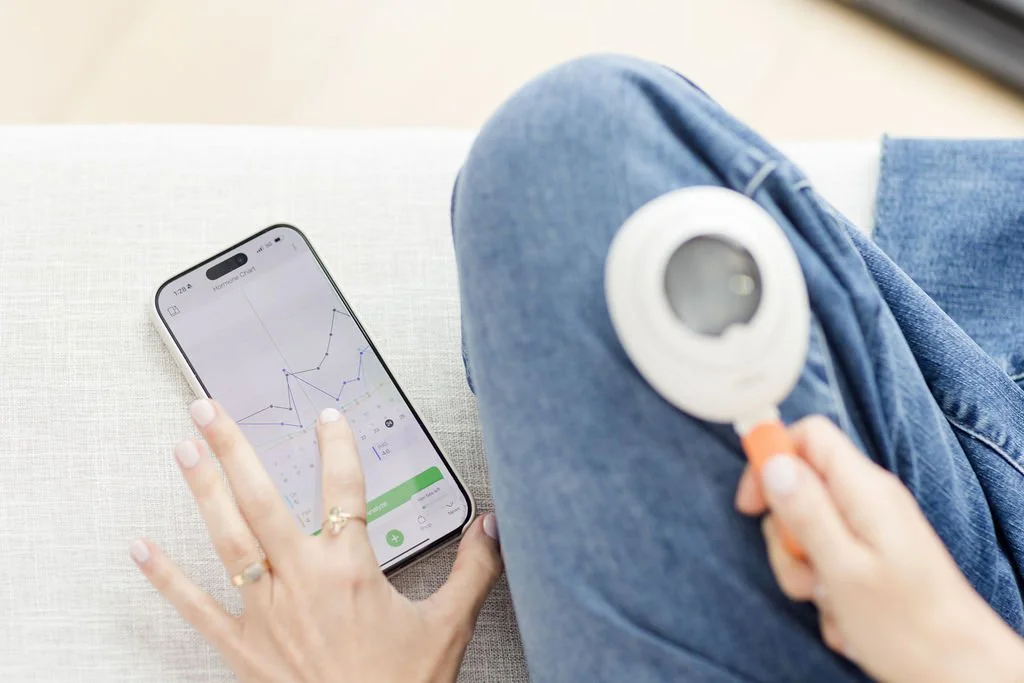
Tools like Mira (a wearable LH and estrogen monitor) or Natural Cycles (an FDA-cleared temperature-based tracking app) can deepen your hormonal picture significantly. I use Mira with clients, and wrote a full post on how femtech tools can help you understand what your cycle patterns are actually showing.
2. Stabilize Your Blood Sugar
Blood sugar dysregulation - the pattern of glucose spikes and crashes that comes from skipping meals, undereating, or eating high-carb without protein or fat - is one of the most overlooked drivers of hormonal disruption. When blood sugar is unstable, cortisol rises to compensate, which directly suppresses the HPG axis - the hypothalamic-pituitary-gonadal pathway that regulates reproductive hormones. I go into more detail in this post on how blood sugar instability shows up as cycle and fertility symptoms.
The ASRM's Optimizing Natural Fertility committee opinion (2022) references the Nurses' Health Study II, which found that women with higher adherence to a fertility-supportive diet - lower in refined carbohydrates and higher in plant-based protein - had a significantly reduced risk of ovulatory infertility. Practical starting points: eating at least 20–30g of protein within 60–90 minutes of waking, pairing carbohydrates with fat and fiber at every meal, and avoiding long stretches without food.
3. Regulate Your Nervous System
Chronic stress - especially the kind high-achieving women carry as a baseline - elevates cortisol and suppresses GnRH, or gonadotropin-releasing hormone, the signaling molecule that initiates the entire ovulatory cascade. This pattern is sometimes called functional hypothalamic suppression: your body downregulates reproduction when it perceives ongoing threat.
This doesn't mean you need to overhaul your life. Small, consistent nervous system inputs such as walking outside without your phone, eating without screens, or a brief breathing practice, can meaningfully lower cortisol over time. Here are some practical nervous system regulation tips that actually fit into a full life.
Research from the HeartMath Institute (2016) found that coherent breathing techniques reduced cortisol and supported HRV (heart rate variability), a key marker of nervous system balance, within weeks of practice.
4. Eat Enough — Especially Protein
Undereating - even subtle, chronic undereating common in women who've spent years navigating diet culture - suppresses leptin, a hormone produced by fat cells that signals to the hypothalamus that the body has enough energy to support reproduction. When leptin drops, GnRH production slows, and ovulation can stall. A study of the Lifestyle and Ovarian Reserve (LORe) cohort, published in PMC (2022), found that women eating diets higher in plant-based protein and lower in refined carbohydrates had improved ovarian reserve markers - including AMH and antral follicle count - compared to those following a Western dietary pattern.
This is permission, not a protocol. Eating enough — especially enough protein — is one of the most direct things you can do for your fertility. I dive deeper intohow low protein intake may be quietly affecting your period and fertility in this post if you’d like to explore that connection further.
When It Makes Sense to Work With a Holistic Fertility Coach Before an RE
A reproductive endocrinologist is a critical resource, but most women preparing for pregnancy don't need to start there. If you're under 35 and have been trying to conceive for less than a year, or if you're still in the preconception preparation stage, foundational holistic work is often the most powerful place to begin.
Working with a holistic fertility coach means building the picture your OB doesn't have time to build: cycle patterns over months, how your food, sleep, stress, and movement interact, and where to focus first for your specific body. It's not about doing more. It's about getting the right information so that when and if you do see an RE, you walk in with real data, not just anxiety.
Book a Hormone Strategy Session to get clarity on what your body actually needs right now
FAQ’s: Hormones and Natural Fertility Support
Q: How can I balance my hormones for fertility naturally? A: Balancing hormones for fertility starts with four foundational pillars: confirming ovulation through cycle tracking, stabilizing blood sugar by eating enough protein and pairing carbohydrates with fat and fiber, regulating your nervous system to lower cortisol, and nourishing your body adequately. These steps support the hormonal cascade needed for consistent ovulation and healthy implantation.
Q: Can you have hormonal imbalances even if your period is regular? A: Yes. A regular cycle doesn't guarantee optimal hormone levels or confirmed ovulation. You can have a 28-day cycle and still have a short luteal phase, low progesterone, or undetected anovulation. Cycle tracking and targeted labs give a more complete picture than cycle length alone.
Q: What labs should I ask for before seeing a reproductive endocrinologist? A: Helpful starting labs include FSH, LH, estradiol, progesterone (drawn on day 19–22 of your cycle), AMH (anti-Müllerian hormone, a marker of ovarian reserve), a full thyroid panel (TSH, free T3, free T4), and fasting insulin. Timing matters for some of these — discuss specifics with your provider.
Q: How long does it take to rebalance hormones naturally? A: Most women begin to see changes in cycle patterns within 2–3 months of consistent foundational support, since each new cycle reflects the hormonal environment of the previous 90 days of egg development. Deeper shifts typically take 3–6 months of intentional, sustained work.
Q: Is working with a holistic fertility coach the same as working with a doctor? A: No. A fertility coach supports the lifestyle, nutrition, and cycle-awareness foundations that complement medical care — but does not diagnose, prescribe, or replace your OB or RE. Think of it as building the foundation your medical team works on top of.
Q: Does L-theanine affect fertility? A: L-theanine, an amino acid found naturally in green tea, may support fertility indirectly by promoting calm alertness and reducing cortisol — the stress hormone that suppresses ovulation when chronically elevated. It isn't a fertility treatment, but for high-achieving women carrying chronic stress, it can be a gentle, evidence-informed tool worth discussing with your provider.
You Don’t Have to Wait for a Diagnosis to Start
Your body has been communicating with you. You've just been given very few tools to understand what it's saying.
The steps in this post — cycle tracking, blood sugar balance, nervous system regulation, and adequate nourishment — aren't quick fixes. They're foundational. And they're the difference between walking into your next appointment feeling lost and walking in with real data about your body.
If you're ready to understand what your hormones are doing and where to focus first, a Hormone Strategy Session is a 60-minute deep dive built exactly for that.
👉 Book your Hormone Strategy Session.
Curious what’s driving your symptoms? Take the free 2-minute Untangle Your Hormones quiz to find your personalized pattern, and a clear next step to start feeling like yourself again.
Last Updated: June 2026
If you liked this post, you may also like:
→ How Leptin Supports Healthy Ovulation and Fertility
→ Why Eating More Might Be the Key to Getting Your Period Back

About the Author
Hi, I’m Sam.
I help women whose hormones have been disrupted by stress or birth control reclaim rhythm and trust in their bodies. With lived experience, deep training, and a non-restrictive, nervous-system-friendly approach, I guide you to restore hormonal balance without control or restriction.



Perimenopause weight gain isn't a willpower problem. Here's why fasting can backfire and what really helps you feel strong, steady, and at home in your body.